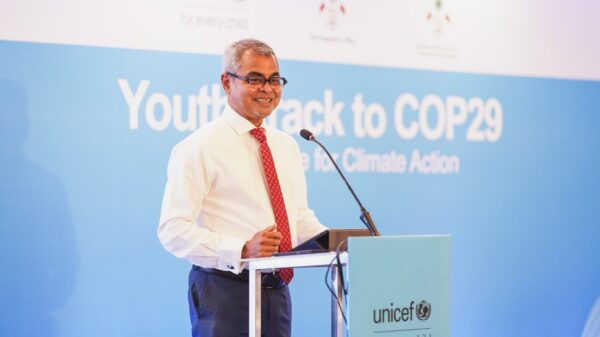
The Maldives government has announced plans to begin groundwork for designating Lhaviyani Atoll as a biosphere reserve, with practical steps commencing next year. Minister of Climate Change, Environment, and Energy, Thorig Ibrahim, confirmed that a comprehensive survey will be undertaken to gather the necessary information to fulfill UNESCO’s criteria for biosphere reserves.
Speaking on the initiative, Minister Thorig revealed that Lhaviyani Atoll was the only region to submit a proposal this year after the government called for applications to establish new biosphere reserves. The proposal has been accepted, and the Ministry is gearing up to launch surveys and studies essential for the application process.


“The practical work will involve surveys and studies required to apply for recognition as a biosphere reserve. This process is expected to be completed within six years,” Minister Thorig stated. He further highlighted that funding for the initiative has already been allocated, ensuring that the project moves forward without delays.
The government’s long-term environmental strategy under President Dr. Mohamed Muizzu includes the establishment of three additional biosphere reserves and several nature parks within the next five years. These efforts are part of a broader commitment to environmental conservation and sustainable management of natural resources.
Currently, the Maldives has three UNESCO-recognized biosphere reserves: Baa Atoll, Addu City, and Fuvahmulah City. The designation of Lhaviyani Atoll as a biosphere reserve would bolster the country’s environmental credentials and promote the preservation of its natural beauty and biodiversity.
Achieving UNESCO recognition for a biosphere reserve involves a rigorous process. Areas must undergo extensive surveys and submit detailed proposals to the international organization. Once approved, biosphere reserves are subject to periodic reviews every ten years to ensure that conservation efforts are sustained.
Minister Thorig expressed optimism that Lhaviyani Atoll would join the Maldives’ existing biosphere reserves, underscoring the nation’s dedication to protecting its unique ecosystems while fostering sustainable development.