
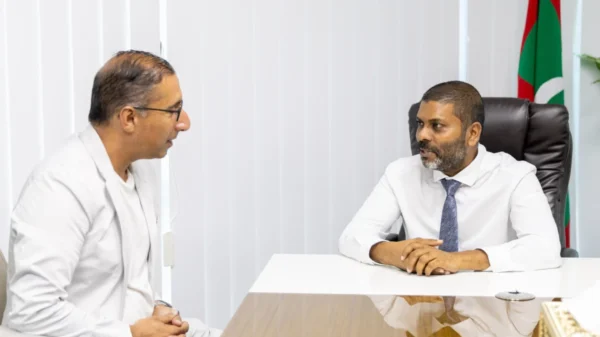





The Maldives should strive to become one of the world’s safest and most resilient destinations, rather than being recognised solely for its natural beauty, Minister of Homeland Security and Technology Ali Ihusan has said.
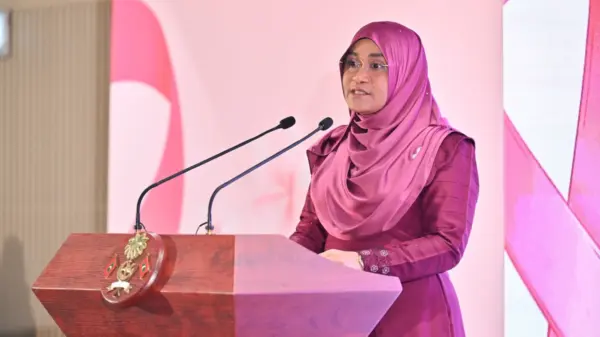
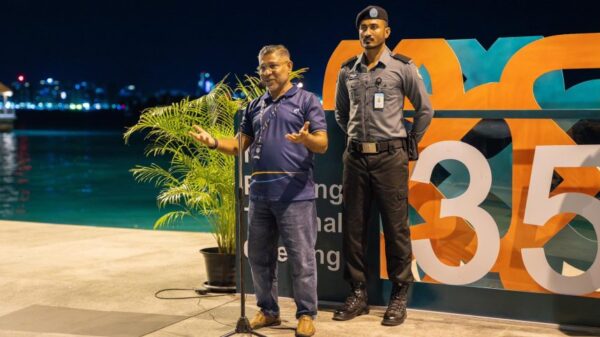
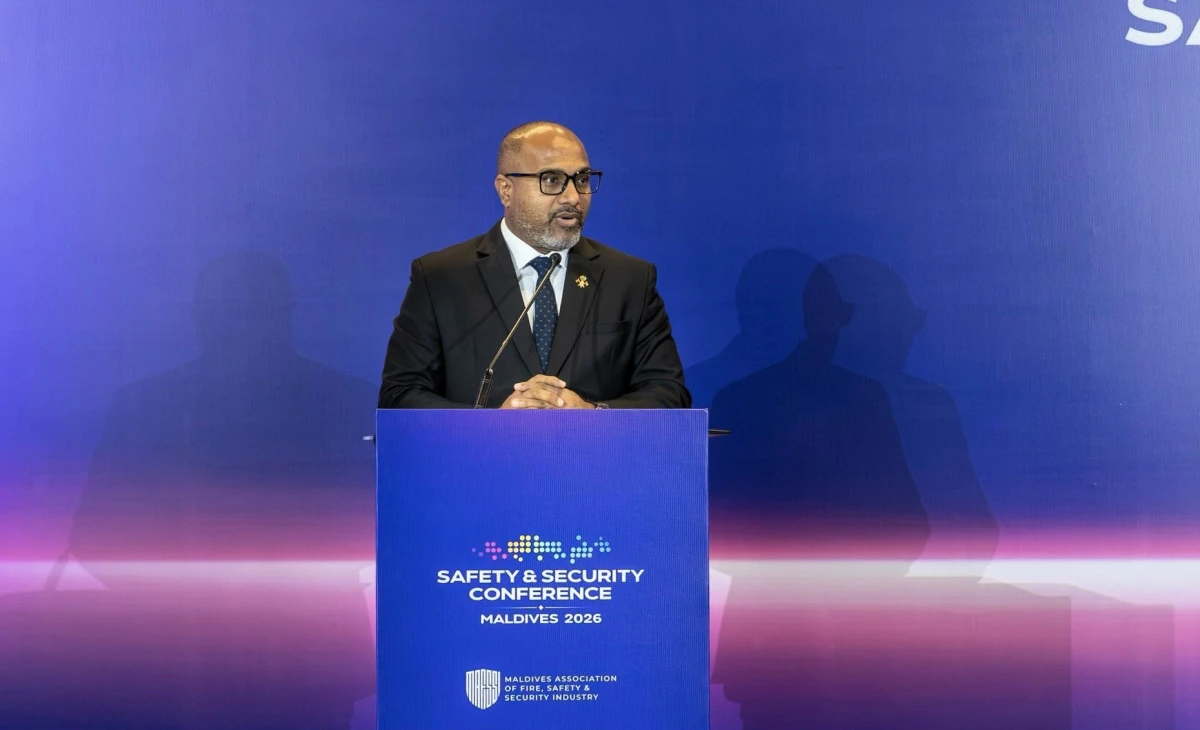
Speaking as chief guest at the two-day Safety and Security Conference, Ihusan said maintaining the Maldives’ position as a leading tourism destination requires safety and preparedness to be treated as fundamental priorities.
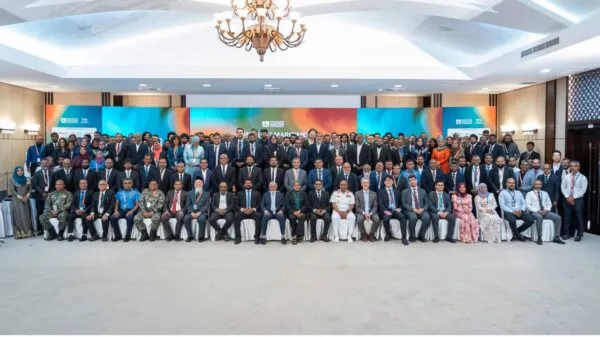
The conference, organised by the Maldives Association of Fire, Safety and Security Industry, brings together stakeholders involved in security, emergency response and the tourism industry to discuss ways of strengthening the country’s ability to respond to emerging risks and disasters.
Ihusan said achieving a safer and more resilient Maldives would require continuous improvements to existing systems, stronger standards and greater investment in training and modern technology.
He stressed that responsibility for national security and emergency preparedness cannot rest with a single institution. Instead, he called for closer coordination between agencies including Maldives Police Service, Maldives National Defence Force, Maldives Immigration, Maldives Customs Service and Fire and Rescue Service, as well as businesses operating across the tourism sector.
The minister said every tourist who chooses the Maldives places a level of trust in the country, and protecting that confidence should remain a shared responsibility.
He said safety and security should become one of the strongest foundations supporting the future of Maldivian tourism, alongside the hospitality and experiences for which the destination is internationally known.
At the same time, Ihusan said security arrangements should be designed in a way that does not make visitors feel restricted or uncomfortable.
According to the minister, an effective modern security framework should operate professionally in the background, providing strong protection without unnecessarily interfering with the movement or experience of tourists.
Ihusan also highlighted the importance of tourism employees who do not traditionally work in security roles. Receptionists, engineers, managers and other frontline employees should be recognised as part of the wider security network and equipped with the knowledge needed to respond appropriately when problems arise, he said.
Communication during emergencies was another area highlighted by the minister.
With information now capable of reaching audiences around the world within minutes, Ihusan said even a relatively small incident can quickly affect the international reputation of a destination. Rapidly providing accurate information and communicating clearly during emergencies should therefore form an important part of disaster management.
He noted that while building trust in a destination can take years, that confidence can be damaged within a short period if an incident is poorly managed.
The minister also called for greater use of artificial intelligence, drones and modern surveillance technology in security operations as new tools become available.
However, he cautioned that technology cannot guarantee safety on its own. Trained personnel, effective procedures, strong standards and cooperation between institutions remain essential to ensuring that technological advances translate into improved security.
Cybersecurity is also becoming increasingly important as tourism operations become more dependent on digital systems.
Ihusan said protecting critical infrastructure associated with resorts, airports and transport networks from cyber threats must be considered part of the country’s broader security responsibilities.
The Maldives faces particular challenges in emergency preparedness because of its dispersed geography. Resorts, inhabited islands, airports and other infrastructure are spread across a large maritime area, making effective coordination and rapid emergency response particularly important.
Safety incidents can also have consequences beyond the immediate location because tourism remains the country’s largest economic sector and the Maldives’ international reputation is closely tied to the experience and confidence of visitors.
Ihusan said the Safety and Security Conference should therefore produce practical outcomes rather than ending solely with presentations and discussions.
He called on government agencies and private businesses to work collectively towards a Maldives that is not only welcoming to visitors, but also prepared to respond effectively to emergencies, disasters and emerging security threats.