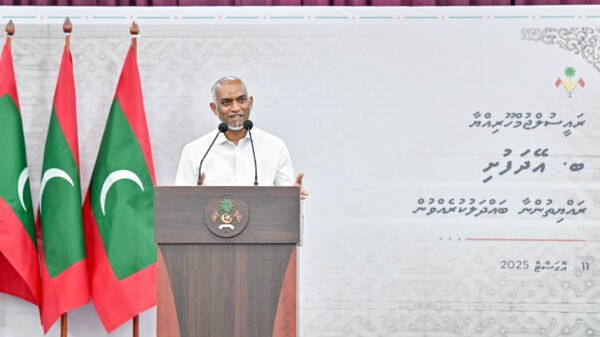







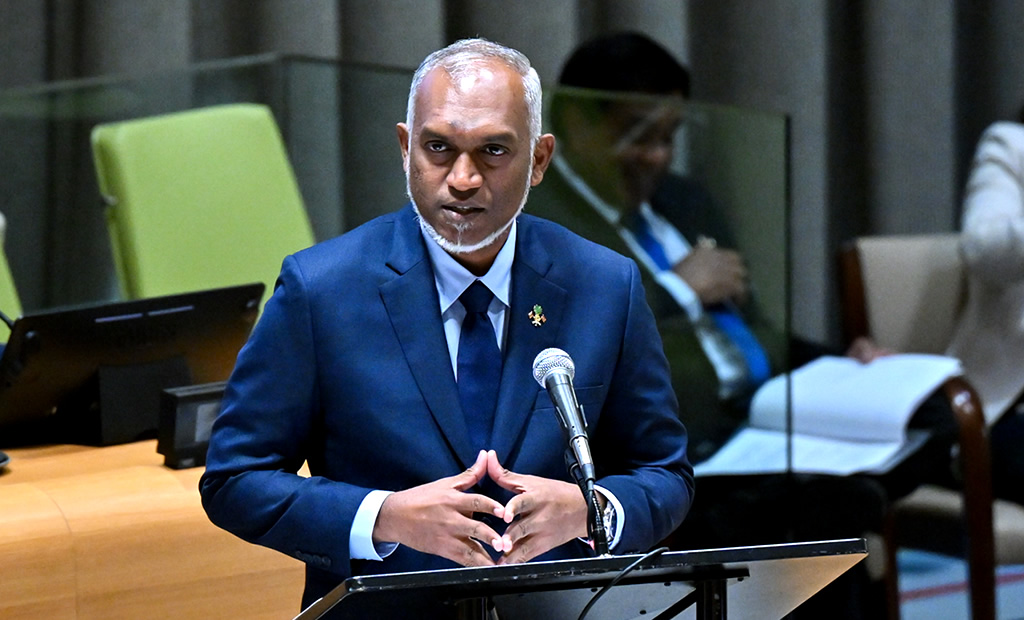
President Dr. Mohamed Muizzu’s recent visit to New York for the 79th United Nations General Assembly (UNGA) marks a turning point in Maldives’ engagement with the world. As the first Maldivian Head of State to address the UN Security Council in 59 years, Dr. Muizzu not only demonstrated his leadership but also solidified the Maldives’ position as a small nation with a loud and clear voice on global issues. In many ways, this visit is a success not just for the Maldives but for small island nations that are seeking to be heard on the world stage.
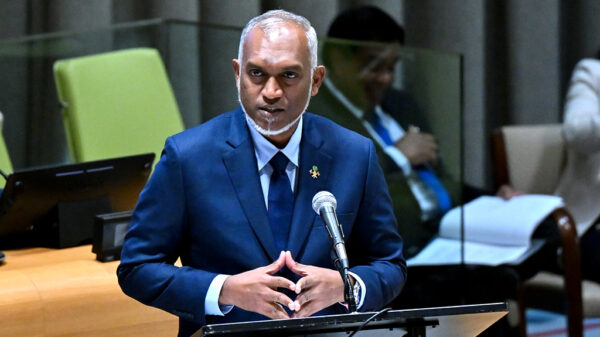
The Maldives’ participation in the UNGA has often been viewed as a ceremonial duty, but this year was different. President Muizzu’s speech during the General Debate stood out for its bold and direct approach to pressing global challenges, particularly on climate change, human rights, and geopolitical reform. His most notable message came in his call for abolishing the veto power of the five permanent members of the Security Council. This is a significant stance, reflecting a broader frustration among smaller nations that have long been sidelined in decision-making processes. For the Maldives to champion this cause signifies the country’s growing confidence in speaking out against global injustices.

Climate Change Advocacy at the Core
As a country that is at the frontline of climate change, President Muizzu’s focus on climate issues was expected, yet his speech delivered in a way that resonated on a deeper level. He urged wealthier nations to live up to their financial promises and contribute meaningfully toward climate adaptation efforts. His message was clear: for countries like the Maldives, survival is at stake, and the world cannot afford inaction any longer.
By reemphasizing the Maldives’ ambitious goal of reaching net-zero emissions by 2030, Muizzu showcased his administration’s commitment to leading by example. He highlighted key renewable energy projects already underway, including ocean current energy, solar power expansions, and waste-to-energy initiatives. These are more than just environmental policies—they represent investments in the future that will secure long-term sustainability for the Maldives.
A Diplomatic Win on Multiple Fronts
Beyond climate change, Muizzu’s visit was successful in strengthening the Maldives’ diplomatic relations with key global players. High-level meetings with UN Secretary-General António Guterres and heads of state from various nations highlighted the Maldives’ role as an active participant in the global community. These meetings provided a platform for discussing bilateral partnerships, from economic development to digital transformation.
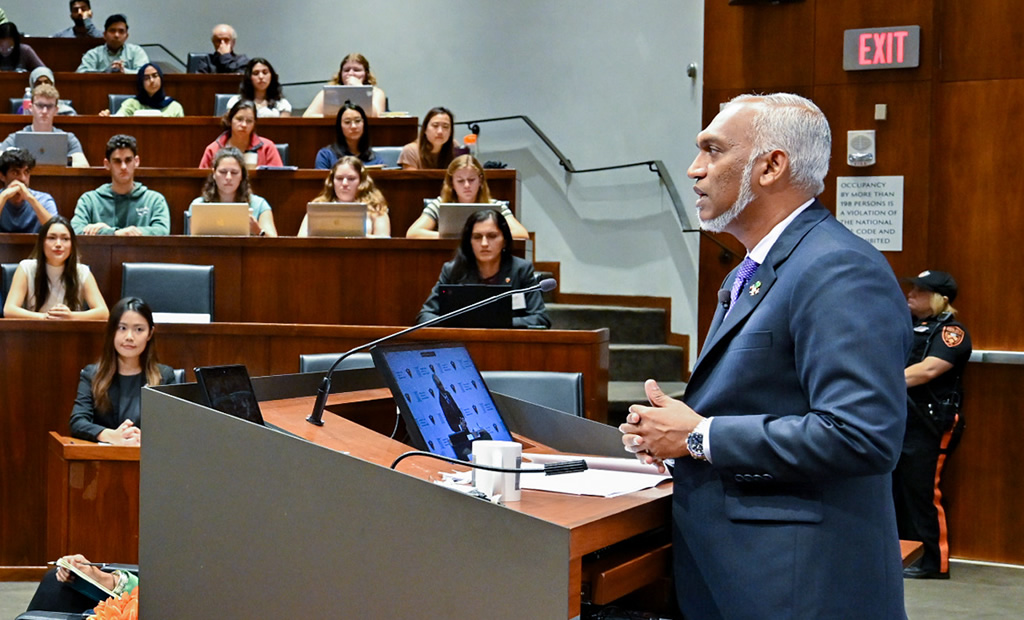
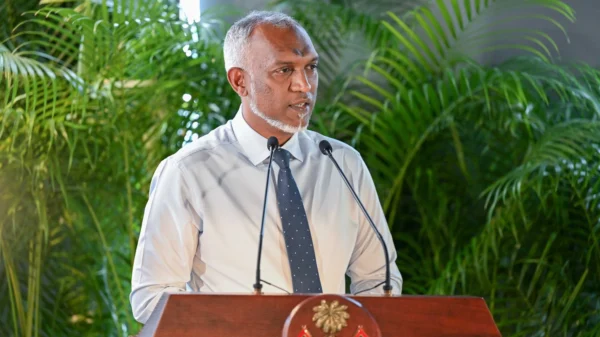
President Muizzu speaking at Princeton University’s School of Public and International Affairs.
The President’s speech at Princeton University’s School of Public and International Affairs was another highlight, where he discussed leadership in a globalised world. This opportunity to speak at such a prestigious institution is an indicator of the growing respect for Muizzu’s leadership on the international stage.
Advocacy for Palestine and Human Rights
President Muizzu’s strong stance on Palestine resonated deeply with many, both at home and abroad. He condemned the Security Council’s inability to stop Israel’s continued aggression and brutal occupation of Palestinian lands. By calling out the international system’s failure to uphold international law in the region, Muizzu showed that the Maldives would not shy away from addressing human rights violations on the global stage, no matter how complex the issue.
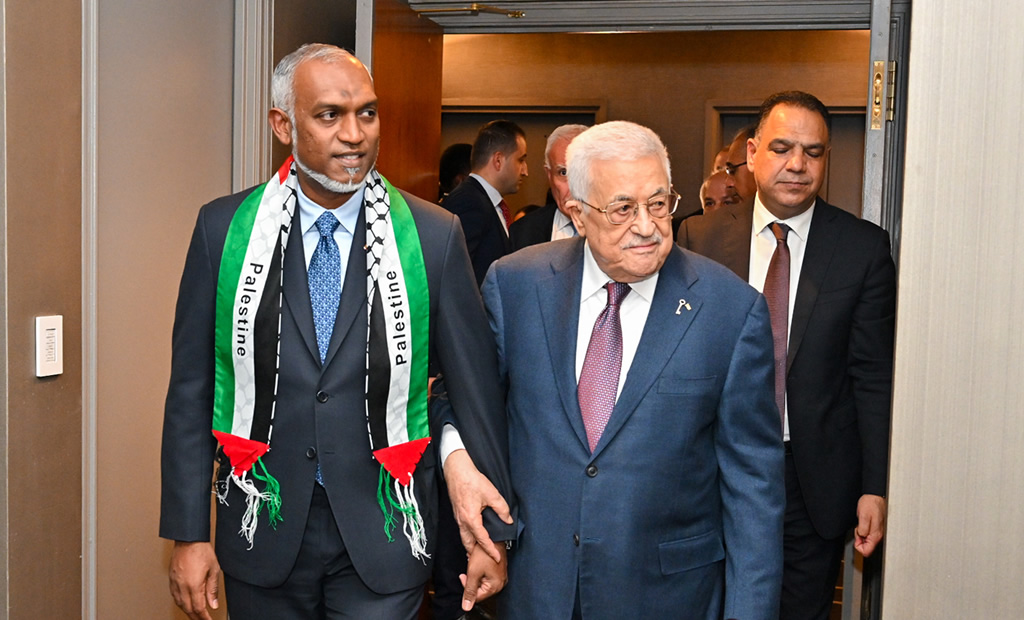
President Dr. Mohamed Muizzu meets with Palestinian President Mahmoud Abbas during the 79th United Nations General Assembly in New York. The two leaders discussed the ongoing situation in Palestine, reaffirming the Maldives’ strong commitment to advocating for Palestinian rights on the global stage.
This advocacy for Palestine is not only a reflection of Maldives’ longstanding support for oppressed peoples but also a reminder of the country’s commitment to justice. Prseident Muizzu’s speech has positioned the Maldives as a vocal defender of human rights, emphasizing that, despite its small size, the country will continue to stand up for what is right.
Meeting the Maldivian Community in New York
An often-overlooked aspect of such visits is the opportunity for national leaders to engage with their citizens living abroad. President Muizzu took time to meet with the Maldivian community in New York, demonstrating his understanding of the importance of Maldivians abroad and their contributions to the country’s socio-economic fabric. This personal touch reflects Muizzu’s intention to foster unity and build a global network of Maldivians who remain connected to their homeland.
A Step Toward Global Leadership
In the broader context, President Muizzu’s UNGA visit is a sign of Maldives’ growing influence. As the world grapples with increasing geopolitical tensions, the Maldives has shown that even small states can play a significant role in shaping global conversations. By addressing the Security Council and calling for reforms, Muizzu placed the Maldives at the center of the debate on international governance. His call for a permanent rotating seat for Small Island Developing States (SIDS) in the Security Council adds another layer to the Maldives’ advocacy for equitable representation.
Muizzu’s visit also demonstrated that the Maldives is no longer content with being a bystander in global affairs. Whether it is climate change, global security, or renewable energy, the Maldives is prepared to lead and contribute. This new era of diplomacy is a refreshing shift that aligns the country’s national interests with global principles of justice, sustainability, and peace.
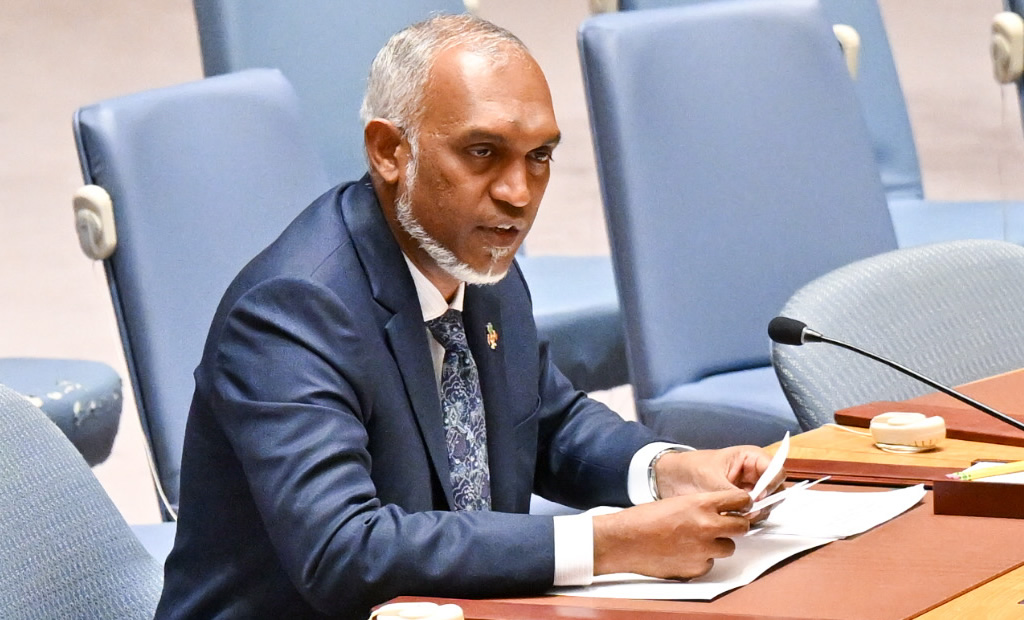
President Muizzu addressing the UN Security Council.
Conclusion: A Defining Moment for the Maldives
President Dr. Mohamed Muizzu’s visit to the UNGA 79 has been nothing short of a success for the Maldives. His speeches, meetings, and leadership have left a lasting impact, not just on the international community but on the people of the Maldives. By tackling issues that are critical to the country’s future, Muizzu has solidified his role as a leader capable of navigating the complexities of the global stage.
For a small nation like the Maldives, such leadership is both inspiring and necessary. Muizzu’s visit sets a new standard for Maldivian diplomacy—one that is assertive, principled, and unapologetically vocal about what matters most. As the world faces increasingly complex challenges, the Maldives, under President Muizzu’s leadership, is ready to play its part in shaping a more just and sustainable future for all.