







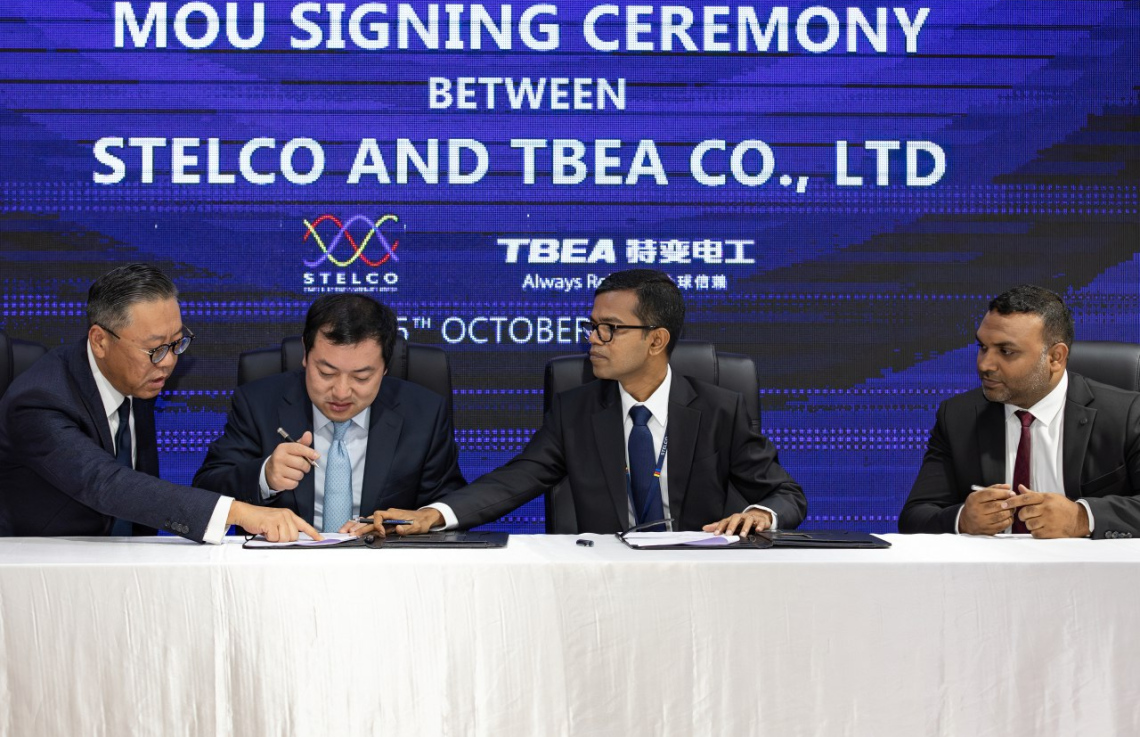
State Electric Company Limited (STELCO) has signed a Memorandum of Understanding (MoU) with China’s TBEA Group to undertake preliminary studies for the construction of a new 150 MW power plant, marking a significant milestone in the development of the Maldives’ energy infrastructure.
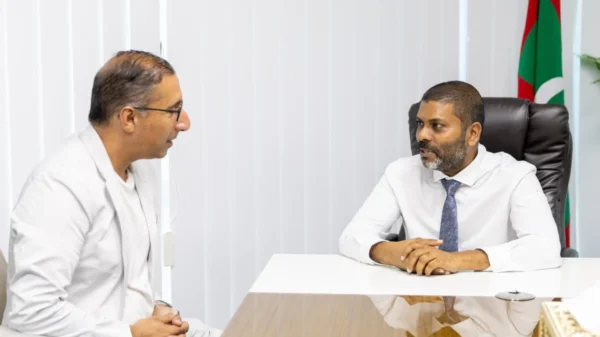
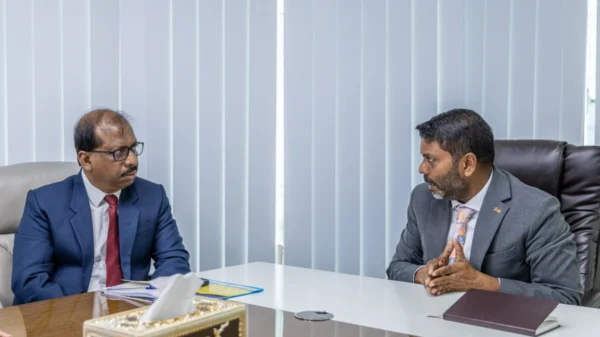
The agreement was signed during a ceremony attended by STELCO Managing Director Hussain Fahmy and TBEA Group Vice President Zhang Hongzhong. This collaboration aims to enhance electricity generation and distribution in the greater Malé region, including Hulhumalé, Vilimalé, Thilafushi, and Gulhifalhu.

The project includes two key initiatives: the construction of a 150 MW dual-fuel power plant on Thilafushi Island and the installation of a high-capacity transmission line that will run along the Thilamale Bridge, connecting several key islands.
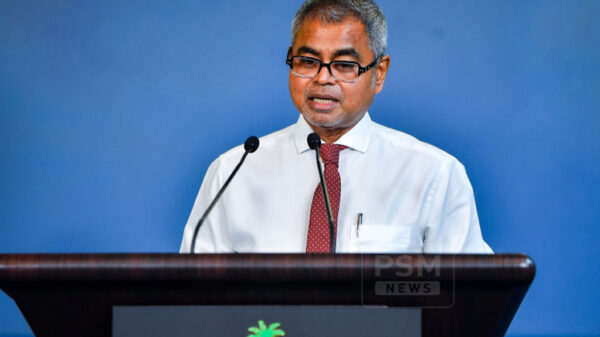
Speaking at the event, STELCO Managing Director Fahmy described the agreement as an essential step in improving the nation’s energy sector. “This partnership with TBEA will greatly enhance the supply of electricity to the Malé area, ensuring a stable and reliable power grid for the growing population and industries,” he stated. The Managing Director further emphasized that the dual-fuel power plant, which will use oil and gas-powered generators, will substantially increase the country’s energy generation capabilities.
According to the details shared, the transmission line will connect Malé, Hulhumalé, Vilimalé, Thilafushi, and Gulhifalhu, creating a robust and integrated network capable of meeting the energy demands of these key regions. The construction of the power plant and transmission line will help address the growing need for electricity in these rapidly developing areas.
In a tweet, Fahmy expressed his excitement about the project, describing it as a “landmark agreement” that aligns with STELCO’s commitment to sustainability. “We are thrilled to announce that STELCO has officially signed a MoU with TBEA Group. This partnership represents a significant step forward in enhancing the Maldives’ energy infrastructure,” Fahmy tweeted, thanking President Dr. Mohamed Muizzu for his leadership and support of the project.
Fahmy also highlighted the sustainability aspect of the initiative, stating that it will not only meet the rising energy demands but will do so using innovative solutions aimed at future growth.
The project represents a vital part of the Maldivian government’s broader efforts to develop a more sustainable and reliable energy supply, especially in the face of increasing urbanization and industrial growth. It is also expected to reduce the strain on existing power systems and improve energy security for the capital region.