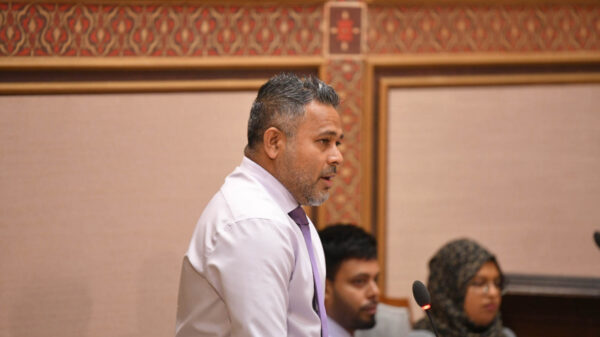

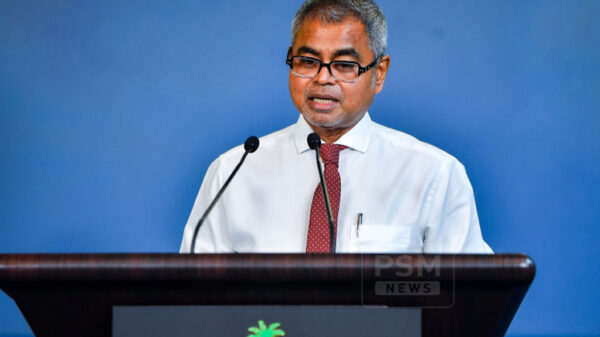


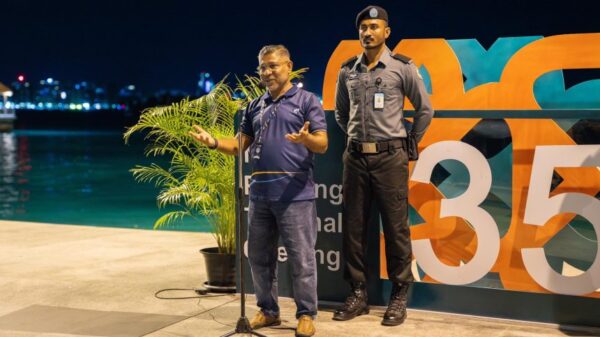








Minister of Fisheries and Ocean Resources Ahmed Shiyam has called for urgent, coordinated action to protect the Maldives’ marine environment, warning that climate change is increasingly threatening the nation’s most valuable natural asset. His remarks came in a heartfelt message delivered on World Oceans Day, as nations around the globe reflect on the significance of marine ecosystems.
In his message, Minister Shiyam underscored the deep connection between Maldivians and the ocean, calling it the country’s greatest blessing and a lifeline for the people. “The ocean provides not only food and income but also shapes our identity,” he said. He stressed that preserving the health of the marine environment is a responsibility that must be shouldered collectively—for today’s citizens and generations to come.

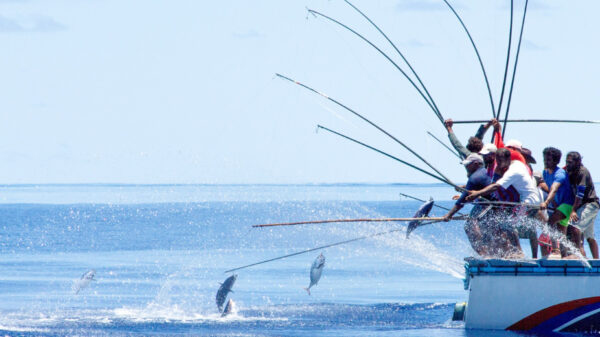
The Minister praised the Maldives’ long-standing commitment to sustainable fishing, noting that traditional pole-and-line fishing practices, passed down through centuries, are testament to the country’s historic respect for marine stewardship. However, he acknowledged that the challenges now faced are far more complex and pressing than ever before.
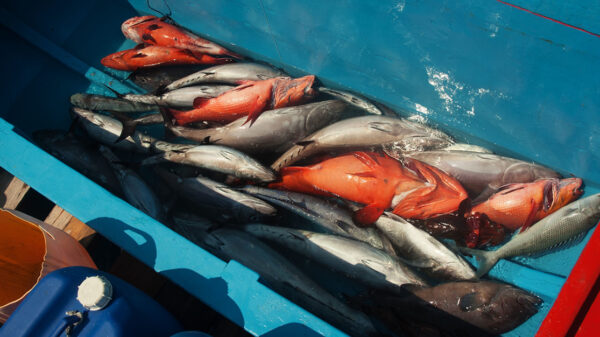
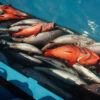
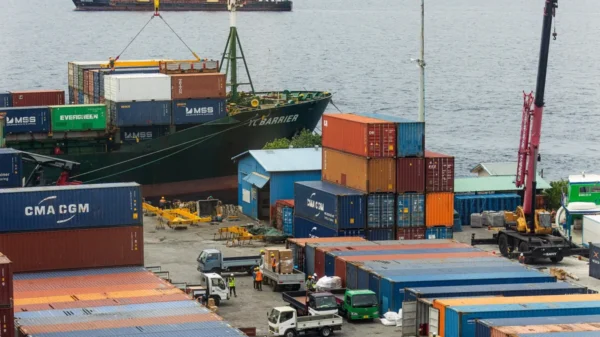
Chief among these is the impact of climate change, which he described as one of the biggest threats to the country’s fisheries industry. Rising sea temperatures are driving tuna species into deeper and more remote waters, he noted, diminishing the effectiveness of traditional fishing methods and contributing to periods of low catch.
“These are not challenges we can solve in isolation,” Minister Shiyam stated. “Climate change is a global problem, but we must also do what we can nationally to adapt and minimise its effects.”
He called on the Maldives to diversify its ocean-based industries and adopt the principles of a blue economy to create more resilient revenue streams, while simultaneously investing in the protection of marine biodiversity. The Minister also stressed the importance of investing in ocean research, human resource development, and the adoption of new technologies to support sustainable marine resource management.
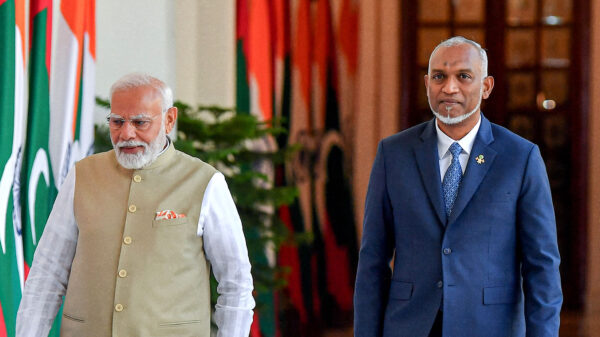
Minister Shiyam cited President Dr Mohamed Muizzu’s emphasis on evidence-based policymaking as a guiding force behind the government’s ocean conservation strategy. He urged stronger collaboration between key sectors such as fisheries and tourism, as well as marine environmentalists, to create a unified system for monitoring the health of the ocean and ensuring informed, science-driven decisions.
“This isn’t just about environmental conservation,” he said. “It’s about securing our way of life, our economy, and our future as a nation that depends on the sea.”
As the Maldives joins the international community in observing World Oceans Day, the message from its Fisheries Minister was clear: protecting the ocean is not an option—it’s an urgent necessity.