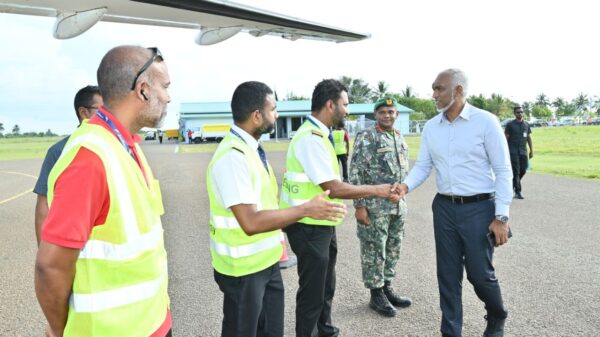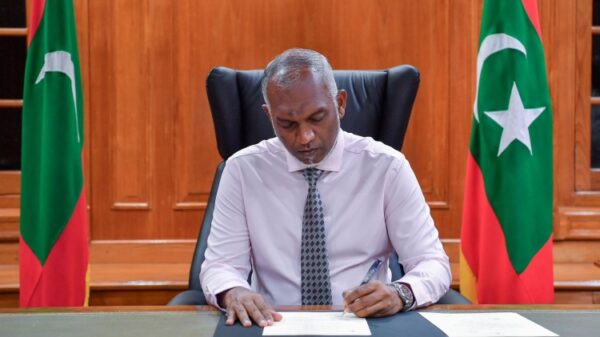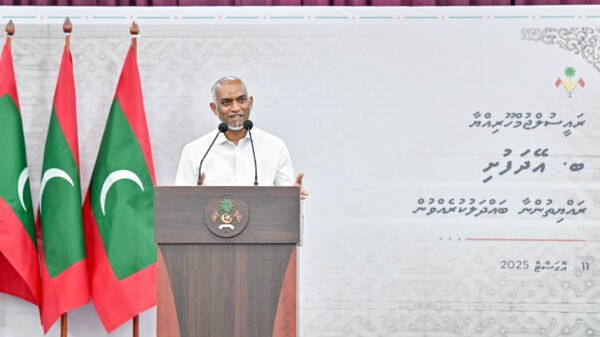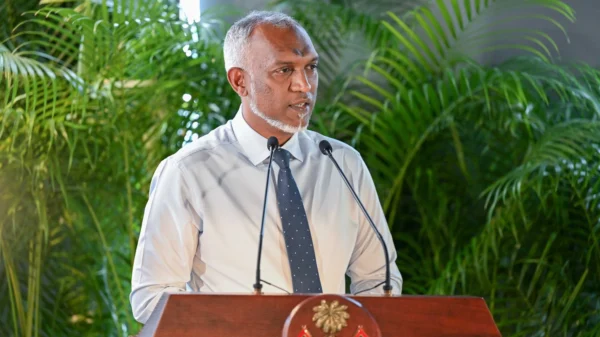




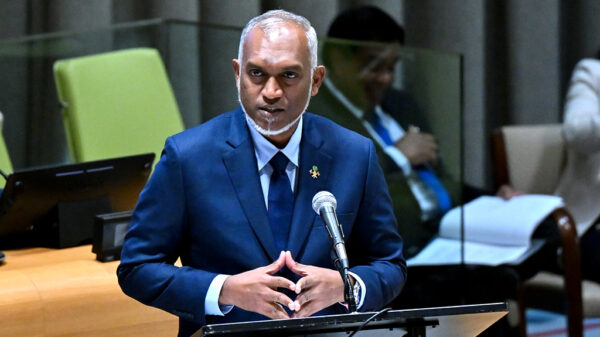






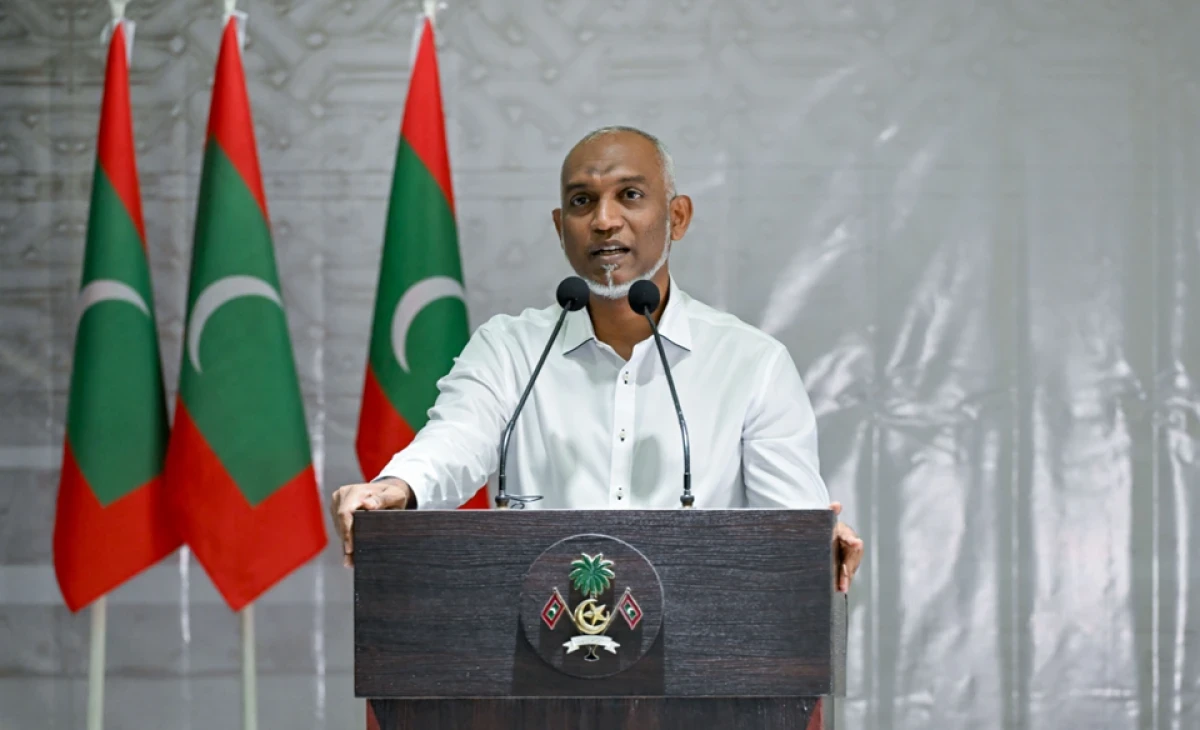
President Dr. Mohamed Muizzu has announced an ambitious development agenda for Maafaru, centering on the expansion of Maafaru International Airport and a host of island-wide infrastructure projects, as part of his 13-island tour of Noonu Atoll.
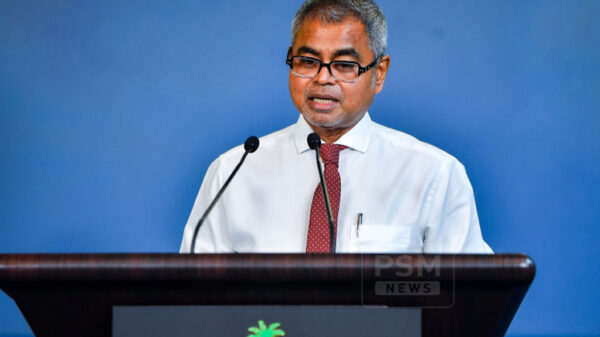
Speaking to residents of Maafaru, President Muizzu emphasized the government’s commitment to enhancing the island’s position as a growing tourism hub. He revealed plans for constructing an international-standard terminal and a transit hotel to serve the increasing flow of visitors, particularly given the concentration of resorts in the atoll.
“The runway is ready, but to truly meet international standards, we must elevate the rest of the airport’s infrastructure,” Muizzu stated. “This includes building a hotel for tourists who require temporary accommodation between flights. These are all part of our strategic vision.”
Boosting Connectivity in a Rising Tourism Region
Noonu Atoll is rapidly emerging as a central player in the country’s tourism landscape, with eight operational resorts and 14 guesthouses. Recognizing the strategic importance of the region, the President underscored that Maafaru Airport must evolve into a “comprehensive and complete facility” that can sustain long-term tourism growth.
The airport’s initial development — completed in 2019 — included a 2,200-meter runway, a terminal, a VIP lounge, and key aviation infrastructure. The current expansion efforts will build on this foundation to enhance terminal capacity and develop short-stay facilities to accommodate transit passengers.
Community-Driven Development: Healthcare, Education, and Housing
Beyond aviation, the President pledged the development of a modern health centre for Maafaru and announced the construction of four new classrooms to meet educational needs. Addressing residents’ concerns, he reaffirmed his administration’s plans to initiate road construction and expand sports infrastructure, including completing delayed futsal projects.
He also confirmed the launch of a new housing initiative for Maafaru under the upcoming year’s national budget. “Many of the projects requested by the community have been approved and will move forward,” he said.
Law Enforcement and Utility Upgrades
Earlier the same day, President Muizzu participated in the groundbreaking ceremony for Maafaru’s new police station, in the presence of Homeland Security Minister Ali Ihusaan and Police Commissioner Ismail Naveen. The Maldives Transport and Contracting Company (MTCC) will carry out the project. The new facility is part of a broader national policy to build police stations on all inhabited islands within two years.
The President also officiated the inauguration of Maafaru’s new water and sewerage systems, completed by the Malé Water and Sewerage Company (MWSC). The USD 86.9 million project spans 20 islands and includes facilities such as water plants, pipelines, storage tanks, and household connections. Maafaru now enjoys consistent access to clean water and a modern sewerage network.
Engaging Local Leaders and Addressing Community Priorities
During his visit, President Muizzu met with the Island Council, Women’s Development Committee, and representatives from institutions such as Fenaka Corporation. The meetings provided a platform for residents to voice concerns, including electricity disruptions and the need for improved healthcare and educational services.
Cabinet ministers accompanying the President offered updates on ongoing projects and reaffirmed the administration’s commitment to aligning national development efforts with local needs.
Nationwide Tour Underway
Maafaru was the first stop in the President’s extensive five-day tour of Noonu Atoll, which spans 13 islands from July 21 to 24. The itinerary includes visits to Hen’badhoo, Holhudhoo, Lhohi, Kudafari, Kendhikulhudhoo, Velidhoo, Manadhoo, Magoodhoo, Maalhendhoo, Miladhoo, Fodhdhoo, and Landhoo, underscoring the administration’s emphasis on decentralization and grassroots consultation.
The president’s development roadmap for Maafaru and Noonu Atoll marks a significant step toward enhancing regional infrastructure, improving public services, and maximizing the area’s economic potential through tourism and community-driven planning.