A dedicated Thalassaemia Patient Care Centre has officially opened in Hulhumalé, offering specialised support for patients living with the condition and aiming to improve access to care for those in the atolls.
The centre, located at the Orange Hiyaa Building—also home to Maldivian Blood Services—was inaugurated this week. Officials say the facility is designed to make routine check-ups, monitoring, and specialist consultations more accessible to families affected by thalassaemia across the country.


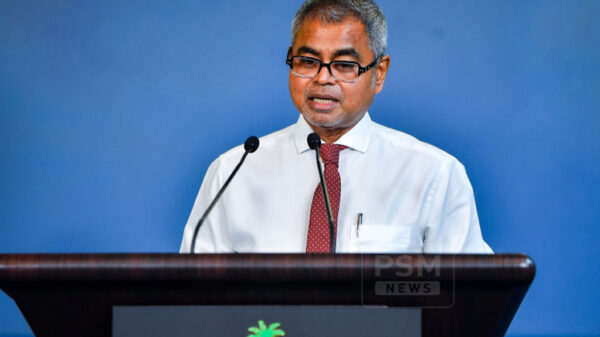
Speaking at the inauguration, Ibrahim Abdul Razzaq Haleem, CEO of Malé City Group of Hospitals, said patients in the atolls have long faced challenges in obtaining specialised services. He noted that the new centre will ease those difficulties by enabling regular monitoring and direct collaboration with regional hospitals.
“If patients struggle to reach doctors or require specialist advice, this centre will step in to provide those services in cooperation with Atoll Hospitals,” Razzaq explained.
Dr Ahmed Umar, Senior Specialist Registrar at Maldivian Blood Services, highlighted that the facility will proactively reach out to patients living outside Malé. He said the centre intends to contact every thalassaemia patient—including children—once every three months to ensure ongoing support and timely interventions.
The initiative was established with assistance from the Belarus Maldives Cultural Centre, underscoring international support for advancing healthcare in the Maldives.
Looking ahead, CEO Razzaq announced that the Malé City Group of Hospitals is preparing to introduce genetic and DNA testing through the Maldivian Blood Services. He said funding has already been allocated for equipment and trained staff. According to Razzaq, DNA testing is essential for prenatal diagnosis, identifying thalassaemia carriers, confirming anaemia, and detecting other rare blood disorders.
Currently, DNA testing is only offered by the Society for Health Education (SHE) at a fee of around USD 65—a price many families find difficult to afford. Officials believe that expanding this service under Maldivian Blood Services will make the tests more widely available and affordable.
Since the national registry for thalassaemia patients was established in 1992, a total of 968 individuals have been recorded, with 670 currently receiving care for the condition.
The launch of the Hulhumalé Thalassaemia Care Centre is being seen as a vital step in easing the burden for patients and their families, particularly in remote communities where specialised care has been hardest to access.