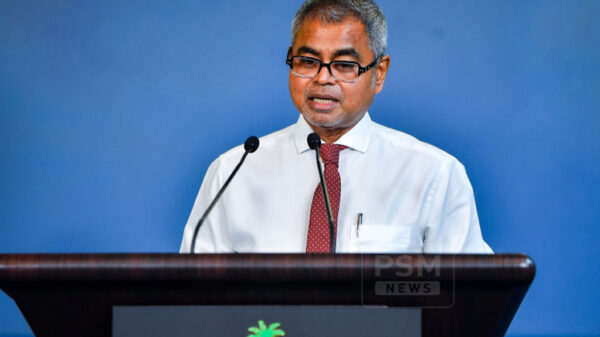
President Dr Mohamed Muizzu has pledged that public opinion will guide any future amendments to national laws, underscoring his administration’s commitment to a governance model shaped by citizens.
Speaking on the ninth edition of the Rayyithunnaa Eku podcast, the President described the upcoming referendum on Addu City’s administrative structure as a historic milestone for decentralisation. He said the vote will allow residents to determine how their city should be governed, noting that the decision rests entirely with the people under the framework of local governance.


Dr Muizzu recalled concerns raised by Addu residents during his presidential campaign, where many voiced frustrations over the current system. He reiterated his promise to seek sustainable solutions, confirming that once the relevant legislation is passed and ratified, the Elections Commission will proceed with a referendum in October.
The referendum will decide whether the islands of Addu Atoll should each carry the suffix “Addu” and elect their own councils, or whether the present model—with a single Addu City Council administering all islands—should continue.
Calling the referendum “historic and significant,” the President said it reflects his administration’s citizen-first approach, ensuring governance is designed in line with public will.
He also highlighted wider reform plans, including measures to strengthen the judiciary’s independence. A share of the upcoming national budget will be allocated as block grants to the judiciary, aimed at reducing reliance on the executive branch and reinforcing impartiality.
On economic and governance concerns, Dr Muizzu said existing provisions for the remuneration of former presidents and parliamentarians no longer match the country’s financial realities and require review. He further noted that Women’s Development Committees will be allocated larger budgets, while the block grant formula for local councils will be revised to ensure fairer distribution of resources.
The President also pointed to structural changes at the State Trading Organization (STO), promising reforms to secure a steady supply of essential goods across the country.
Dr Muizzu concluded by reiterating that his government’s reforms will be rooted in public consultation, with decisions designed to reflect the aspirations and priorities of Maldivian citizens.