The Election Commission of Maldives (ECM) has said that the enactment of a separate law governing public referendums represents a major milestone in advancing the country’s democratic system.
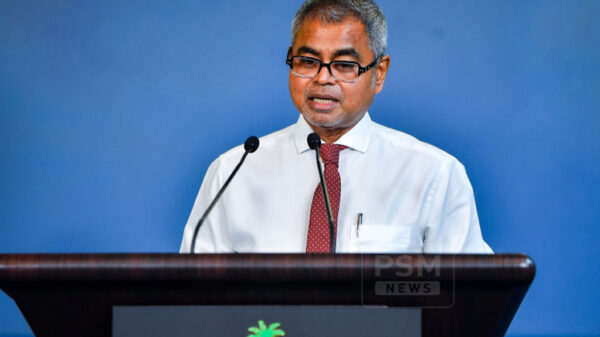
Speaking to PSM News, Election Commissioner Mohamed Zahid said the new Public Referendum Act establishes a clear and independent legal framework for consulting the public on major national issues — a process he described as vital to strengthening democracy in the Maldives.


“This is a significant step forward,” Zahid said. “A public vote under the General Referendum Act will have a positive impact on the democratic environment in the Maldives. Giving citizens a direct say on key issues is a cornerstone of any mature democracy.”
The remarks come ahead of the referendum scheduled for 25 October, which will be the first vote conducted under the new law. Residents in three wards of Addu City — Hulhudhoo, Meedhoo, and Feydhoo — will participate in the historic ballot to decide on changes to the administrative structure of the city’s council.
The upcoming vote will determine whether separate island councils should be established for Addu Feydhoo, Addu Hulhudhoo, and Addu Meedhoo, or whether a single Addu Hulhumeedhoo Council should be formed to manage both Hulhudhoo and Meedhoo.
Zahid emphasised that conducting referendums under a dedicated legal framework ensures transparency, accountability, and consistency in how national and local issues are decided. He also reaffirmed the ECM’s commitment to “strengthening and improving the democratic environment” by empowering citizens to participate directly in decision-making.
“In a multi-party democracy, asking the people directly — especially at the island level — is one of the most important ways to build trust and ensure that governance reflects their voice,” Zahid said.
Under the Public Referendum Act, referendums can be held on matters of national importance or specific constitutional amendments. The Parliament is authorised to decide whether a public vote is needed on certain policy matters, while the President may call a referendum on issues of national significance.
The ECM has welcomed the government’s efforts to promote public participation and strengthen the democratic culture in the Maldives, describing the October vote as a “historic milestone” in that journey.