





















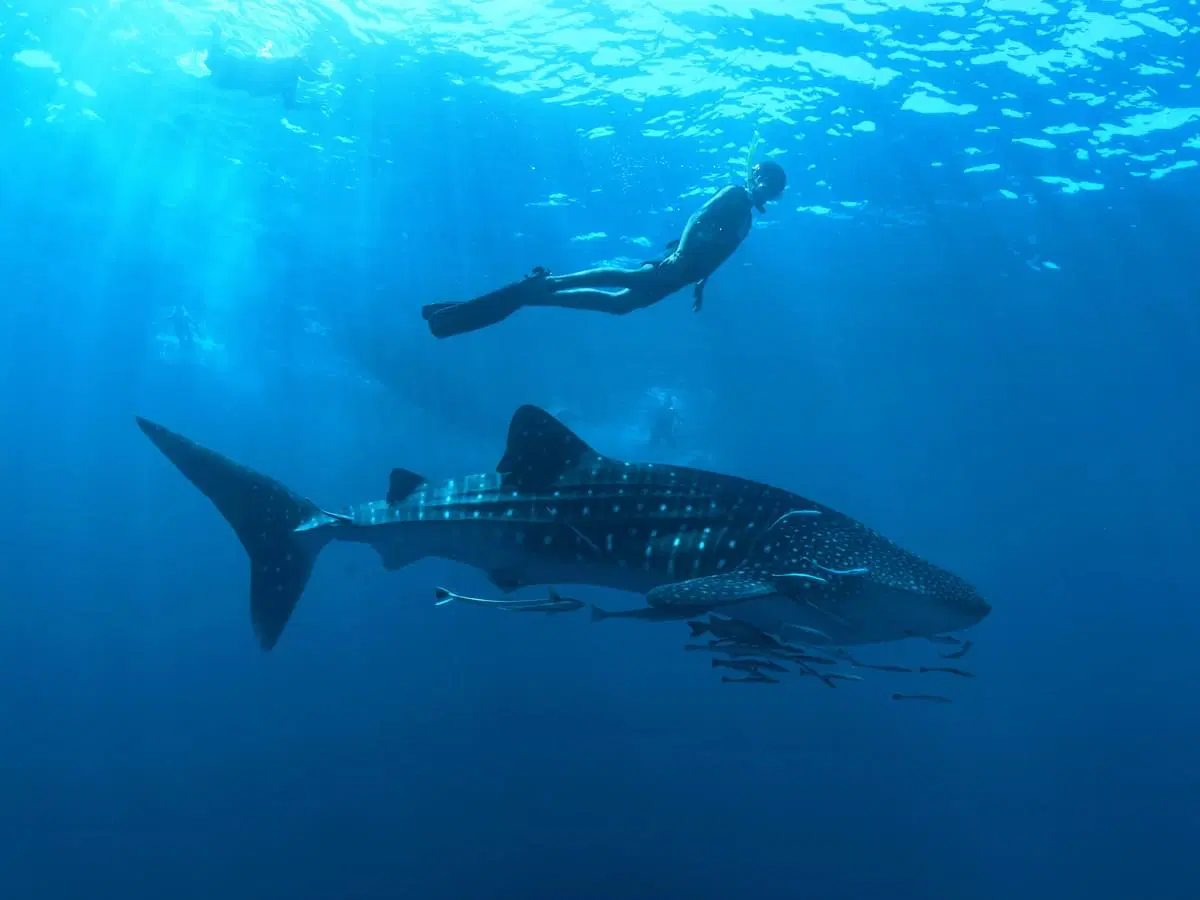
The Maldives has successfully secured the highest level of international protection for whale sharks, after its proposal to uplist the species to Appendix I of the Convention on International Trade in Endangered Species (CITES) was adopted at the 20th Conference of the Parties (CoP20). The decision will effectively ban all international commercial trade of whale sharks, permitting only strictly controlled non-commercial use for research or conservation.
Delegates at the conference also approved a proposal supported by the Maldives to list all mobula ray species under Appendix I, extending similar protections to another group of highly vulnerable marine animals.

In a statement, the Ministry of Tourism and Environment said the decisions align with national conservation policies and global environmental commitments. Officials noted that the strengthened listings build on years of domestic protection measures already in place for endangered marine life.
The Maldives also co-sponsored another key proposal adopted unanimously at the conference — a halt on commercial trade involving guitarfish and wedgefish. Conservation experts say many of these species have been pushed to the brink of extinction due to illegal fin markets and widespread habitat degradation, and a temporary trade suspension is expected to support population recovery.
This year’s conference holds additional significance as it marks 50 years since the establishment of CITES — an international framework now regulating trade in more than 40,000 species through three appendices. Despite increasing awareness, whale sharks, mobula rays, and several guitarfish species remain listed as Endangered or Critically Endangered on the International Union for Conservation of Nature (IUCN) Red List.
The Ministry described the outcome as a “milestone achievement” for the Maldives, where marine biodiversity forms the backbone of both cultural identity and major economic sectors such as tourism and fisheries.
With the new listings now in effect, member states are required to enforce trade restrictions and strengthen monitoring and compliance measures — a move conservation groups say will help safeguard future generations of vulnerable ocean species.