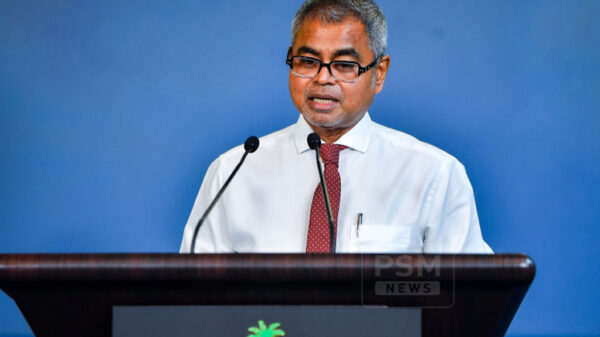
Minister of Foreign Affairs Abdulla Khaleel has drawn attention to the growing security implications of rising sea levels during a side event held alongside the Munich Security Conference in Munich, Germany.
Dr Khaleel delivered his remarks at a panel discussion jointly organised by the Global Centre for Climate Mobility (GCCM) and the Robert Bosch Stiftung, titled “Rising Seas, Rising Risks: How to respond to the multidimensional security challenges posed by sea level rise.” The session explored how climate-driven changes, particularly sea-level rise, are reshaping global security dynamics.


Addressing participants, the minister said that while climate change affects every nation, its consequences are disproportionately severe for small island states such as the Maldives, which contribute minimally to global greenhouse gas emissions yet face some of the gravest risks.
He warned that rising sea levels and increasingly intense weather events pose direct threats not only to livelihoods and infrastructure, but also to national security and economic stability in vulnerable countries.
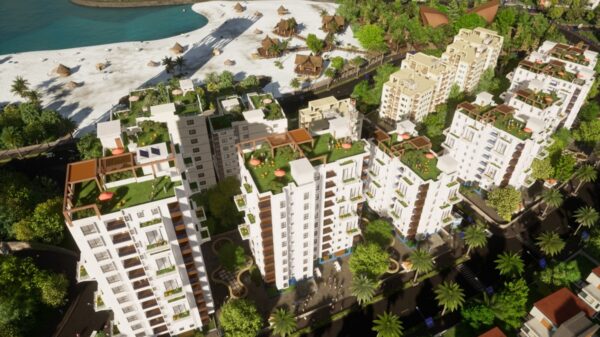
Dr Khaleel outlined measures being implemented by the Maldives to strengthen resilience against climate impacts. Among them is the development of Ras Malé, an elevated “safe city” project designed to withstand sea-level rise. He also highlighted ongoing investments in infrastructure aimed at reducing climate vulnerability.
However, the minister stressed that adaptation efforts alone will not be enough to address the broader global consequences of climate change. He called for meaningful international action backed by strong political will, underscoring the importance of cooperation in tackling the security dimensions of environmental change.
Reaffirming the Maldives’ commitment to climate action, Dr Khaleel urged the international community to intensify collaboration to safeguard countries most exposed to climate risks and to work collectively toward a secure and sustainable future.