President Dr. Mohamed Muizzu has announced an ambitious target to establish modern waste management centres across every inhabited island in the Maldives within the next two years, as part of broader efforts to strengthen environmental protection and sustainability.
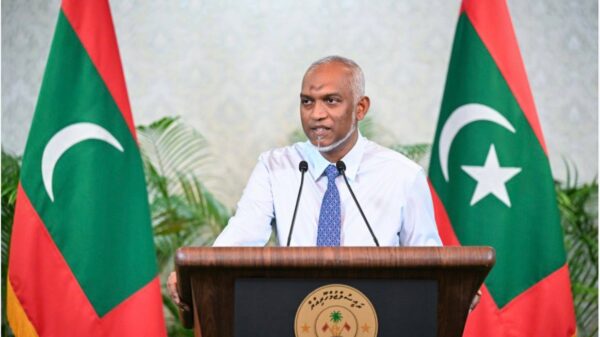
The President shared the goal during the inaugural episode of The Pulse, a newly launched podcast series by the President’s Office aimed at discussing issues of national importance and addressing public concerns.


Speaking on environmental priorities, Muizzu said the government is working to ensure that development projects are carried out alongside strong environmental safeguards. He emphasized that environmental sustainability remains a key component of the administration’s long-term development agenda.
Among the major initiatives highlighted during the programme was the government’s plan to create modern waste management systems capable of handling locally generated waste more efficiently across the country.
According to the President, the administration aims to complete the establishment of waste management centres equipped with contemporary facilities on all inhabited islands within the next two years. The initiative is expected to strengthen waste collection, processing and disposal systems while addressing one of the country’s longstanding environmental challenges.
Waste management has remained a major issue for the Maldives for years, particularly on smaller islands where limited land availability and growing populations have increased pressure on local disposal systems. Environmental experts have repeatedly called for stronger island-level waste management infrastructure to reduce pollution and protect marine ecosystems.
In addition to waste management reforms, the President outlined several other environmental projects currently being pursued by the government.
These include the Five Million Trees Programme, a nationwide initiative aimed at increasing green spaces across islands and urban areas, as well as efforts to generate 33 percent of the country’s electricity from renewable energy sources.
Muizzu also highlighted ongoing coastal protection projects, noting that safeguarding island shorelines against erosion and climate-related impacts remains a priority. He said the government intends to expand shoreline protection measures alongside broader environmental resilience programmes.
Addressing concerns surrounding land reclamation, the President acknowledged that reclamation projects remain necessary to meet the country’s development and housing needs. However, he stressed that such projects are being implemented with environmental considerations in mind.
As an example, he pointed to environmental mitigation efforts being undertaken alongside the Ras Malé development project, including a large-scale coral propagation and restoration programme designed to support reef ecosystems affected by reclamation activities.
The President further revealed that the government is working on baitfish replenishment initiatives to help offset potential impacts of development projects on the fisheries sector, particularly the baitfish populations that play a crucial role in the Maldives’ pole-and-line tuna industry.
He said the administration’s environmental policies are being implemented through a comprehensive approach that seeks to balance economic development, environmental conservation and climate resilience.
The discussion formed part of the first episode of The Pulse, which was released on World Environment Day and focused entirely on environmental issues. The programme featured questions from members of the public as well as journalist Yameen Mohamed of Vaguthu Online.
As one of the world’s lowest-lying nations and among the countries most vulnerable to climate change, environmental protection remains a critical national issue for the Maldives. Government officials say ongoing investments in waste management, renewable energy, coastal protection and ecosystem restoration are intended to strengthen the country’s environmental resilience while supporting sustainable development.