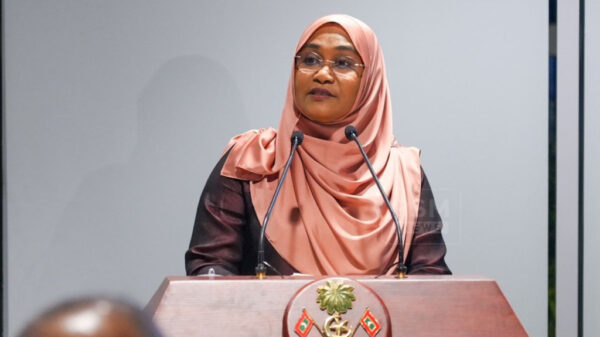
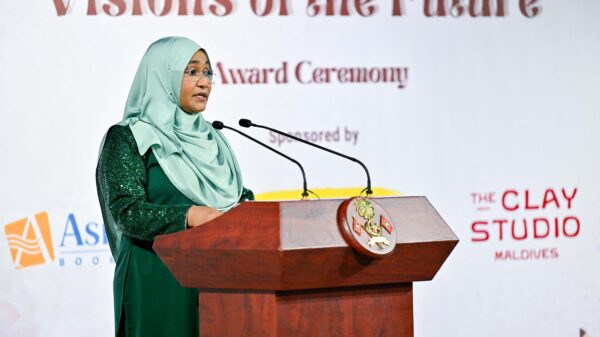
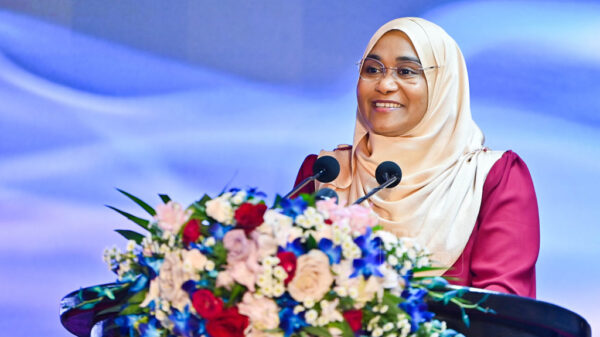
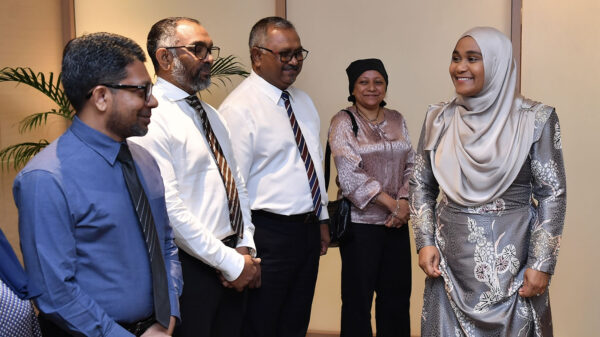
First Lady Sajidha Mohamed has called for a more connected healthcare system in the Maldives, stressing that women should not face delays in breast cancer diagnosis or treatment simply because of where they live.
Speaking at the opening ceremony of the Breast Cancer Awareness Symposium, the First Lady said geographical barriers must be addressed to ensure patients across the country can access timely medical examinations, specialist consultations and appropriate treatment.

She emphasised that tackling cancer requires more than providing treatment at hospitals, describing it as a challenge that demands coordination across the entire healthcare system.
“Our goal should be to establish a connected healthcare system where geographical distance does not become a reason for delays in disease detection and receiving treatment,” she said.
The First Lady’s remarks highlight a longstanding challenge for healthcare delivery in the Maldives, where communities are spread across geographically dispersed islands and access to specialised medical services can vary considerably.
While primary healthcare services are available across the atolls, patients requiring advanced diagnostic procedures and specialist treatment may need to travel to larger regional facilities or Malé.
For conditions such as breast cancer, delays in obtaining diagnostic tests, specialist assessments or treatment can have significant consequences, making effective referral systems particularly important.
Sajidha said strengthening breast cancer services throughout the country must therefore be accompanied by improvements to referral pathways, ensuring patients can move through different stages of diagnosis and treatment without unnecessary delays.
She also highlighted the importance of equipping healthcare facilities with the resources needed to detect cancer accurately and at an early stage.
According to the First Lady, reliable mammography, ultrasound, biopsy and pathology services are essential components of an effective breast cancer diagnosis system.
These services help medical professionals identify suspicious abnormalities, investigate possible cancers and determine the appropriate course of treatment.
She also drew attention to the potential of artificial intelligence in strengthening diagnostic capabilities.
However, Sajidha cautioned that introducing advanced technology alone would not be sufficient. Healthcare professionals must receive appropriate training to use these tools effectively if patients are to benefit from them.
Her remarks come as artificial intelligence is increasingly being explored internationally as a tool to assist medical professionals in analysing diagnostic images and identifying abnormalities that may require further investigation.
Such technology can support clinical assessments, although trained medical professionals remain essential for interpreting results and making treatment decisions.
Beyond early detection, the First Lady stressed that patients must receive coordinated care once cancer has been diagnosed.
She said radiologists, surgeons, oncologists, pathologists and nurses should work closely together rather than operate as separate parts of the healthcare system.
A coordinated approach, she explained, would help ensure that patients receive timely decisions, appropriate treatment and continued support throughout their care.
Breast cancer treatment can involve several stages, including diagnostic investigations, surgery, medication and other specialised therapies, depending on the type and stage of the disease.
Effective communication between medical specialists is therefore an important part of developing treatment plans that address each patient’s individual needs.
The First Lady also recognised the emotional and social challenges faced by people living with cancer, noting that the impact of the disease extends beyond hospitals and medical procedures.
She acknowledged the important role played by families and communities in supporting patients through diagnosis, treatment and recovery.
Addressing women directly, Sajidha encouraged them to prioritise their health and seek medical attention without delay when they notice concerning changes or symptoms.
Early medical assessment is particularly important because breast cancer treatment is generally more effective when the disease is identified before it has progressed to an advanced stage.
October is observed internationally as Breast Cancer Awareness Month, with campaigns focusing on improving public understanding of the disease, encouraging timely medical consultations and promoting access to appropriate screening and treatment.
The observance also highlights the importance of reducing barriers that prevent women from obtaining healthcare, particularly in communities where specialist services are less accessible.
In the Maldives, geographical separation between islands makes the availability of diagnostic services, referral arrangements and continuity of treatment especially relevant to efforts to improve cancer care.
The First Lady concluded by reminding the public that discussions about cancer must never lose sight of the individuals and families affected by the disease.
Behind every cancer statistic, she said, is a person with a family and a life of their own, whether a mother, child, sibling or friend.
She called for greater compassion, awareness and collective responsibility in ensuring that people living with cancer receive the care and support they need.