














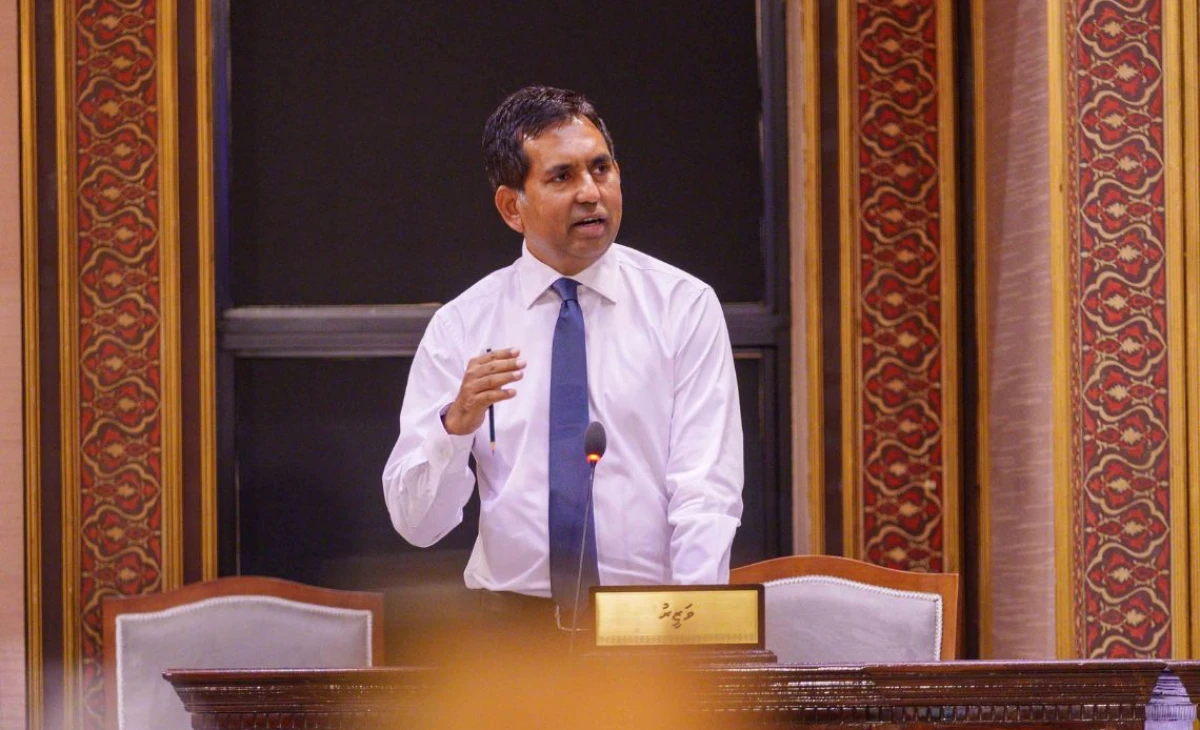
Minister of Economic Development and Trade Mohamed Saeed has survived a parliamentary no-confidence motion, defending his economic record by claiming that the government has secured an unprecedented 313 foreign investments under President Dr Mohamed Muizzu’s administration.
The People’s Majlis voted overwhelmingly in favour of retaining Saeed on Wednesday, with 54 lawmakers expressing confidence in the minister and only 10 supporting the opposition’s attempt to remove him.
The motion was submitted in August by 13 members of the opposition Maldivian Democratic Party (MDP), who accused Saeed of failing to fulfil his ministerial responsibilities, obstructing parliamentary accountability and inadequately addressing the country’s economic challenges.
Among the opposition’s principal concerns was the persistent shortage of US dollars, which has forced businesses and individuals to rely on the informal foreign exchange market, where rates have exceeded MVR 21 per dollar.
The MDP also questioned the government’s expenditure on overseas investment forums and project inauguration ceremonies at a time when the Maldives continues to face significant fiscal pressures.
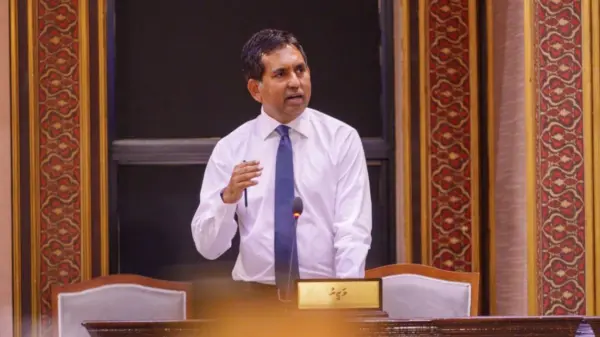
Responding to the allegations during Wednesday’s parliamentary sitting, Saeed rejected the opposition’s criticism and presented figures he said demonstrated improvements in foreign currency availability and investment activity.
The minister said approximately USD 1.9 billion had been made available to the public at the official exchange rate since the current administration took office in November 2023.
He compared this with approximately USD 1.75 billion released during the final three years of former President Ibrahim Mohamed Solih’s administration.
According to Saeed, the average monthly distribution of US dollars under the current government had increased by nearly 97 percent compared with the corresponding period under the previous administration.
He argued that the figures contradicted claims that the government’s economic policies had worsened the availability of foreign currency.
The minister attributed the increase partly to measures introduced to improve the circulation of foreign currency through the domestic banking system, including requirements for businesses earning foreign currency to exchange a prescribed portion of their revenue through local banks.
Under the government’s foreign currency regulations, eligible tourism businesses and other designated entities are required to exchange part of their foreign currency earnings through the banking system, with the measures intended to improve access to dollars for essential transactions.
Despite these measures, the difference between official and informal dollar exchange rates has remained a concern for businesses and individuals who depend on foreign currency for imports, education and medical expenses abroad.
Saeed also defended the government’s performance in attracting foreign investment, presenting a comparison of investment registrations across the past four presidential administrations.
He said 313 foreign investments had been secured during Muizzu’s presidency so far, describing the figure as a record compared with previous administrations.
The minister presented the number as evidence of growing investor interest in the Maldives and the effectiveness of the government’s economic policies.
However, the figures cited during the sitting did not establish the total financial value of the investments or distinguish between registered investment projects and those that have commenced operations.
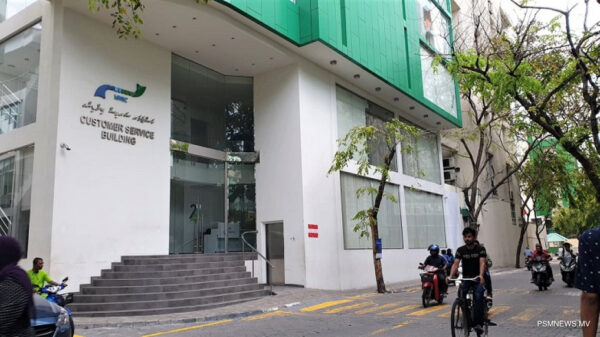
Saeed further rejected allegations that his ministry had failed to maintain transparency, describing the Ministry of Economic Development and Trade as an example of good practice in the disclosure of public information.
He maintained that the ministry had fulfilled its responsibilities and continued to implement policies aimed at strengthening the country’s economy.
The no-confidence motion came amid wider debate over the Maldives’ economic outlook, including public debt, foreign currency shortages and the government’s efforts to attract investment while reducing fiscal pressures.
Under the Constitution, Cabinet ministers are accountable to the People’s Majlis, which has the authority to remove ministers through a successful vote of no confidence.
Wednesday’s vote ended the opposition’s attempt to remove Saeed, allowing him to continue overseeing the government’s economic development, trade and investment policies.



