











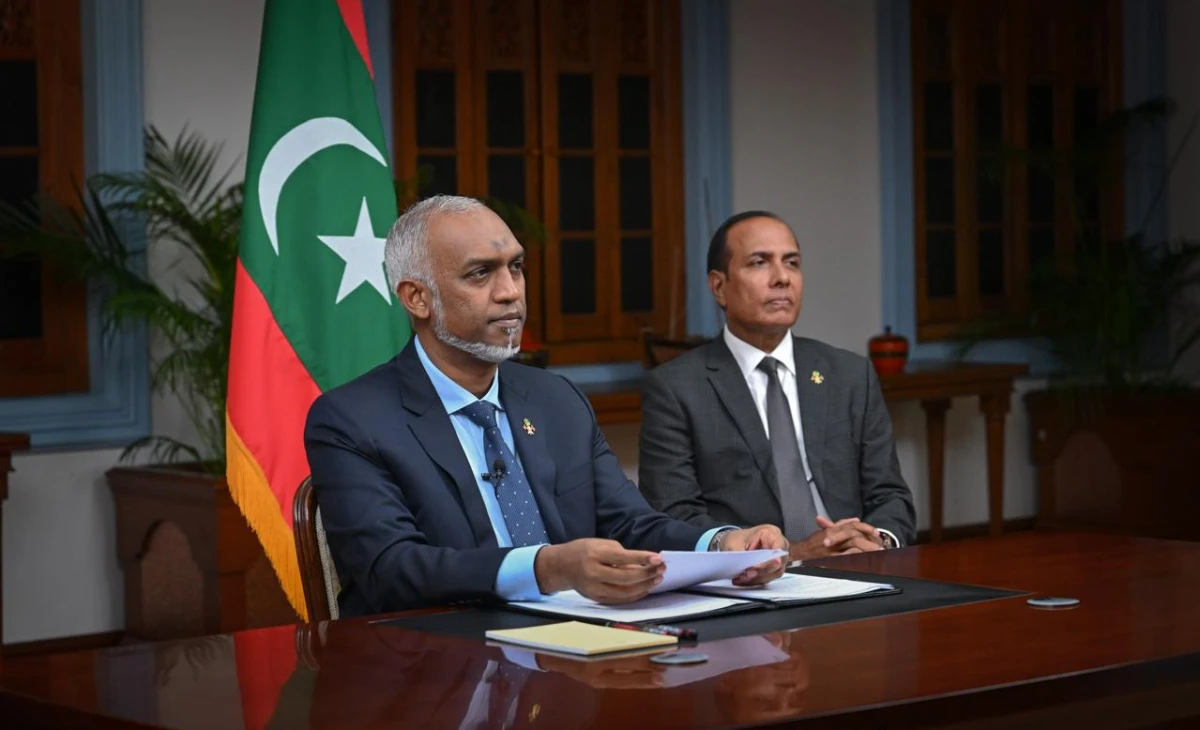
President Dr Mohamed Muizzu has expressed strong support for the proposed Debt Sustainability Support Service (DSSS), calling it a promising solution to the pressing climate financing needs of Small Island Developing States (SIDS) such as the Maldives.
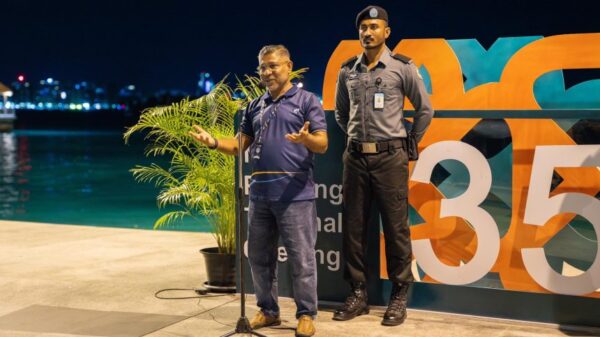
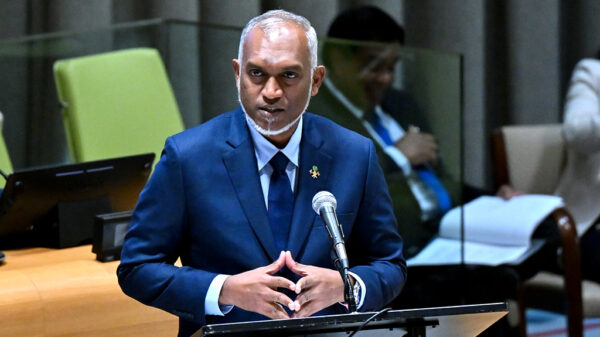
Speaking in his capacity as Co-Chair of the SIDS Strategic Advisory Group, President Muizzu delivered the opening address at a recent high-level forum, where he described the DSSS as a potential turning point in sustainable development for island nations. The Maldives currently shares the co-chairmanship of the group with Antigua and Barbuda.

He stressed the urgency of operationalising the DSSS, emphasizing that resolving debt challenges is a vital prerequisite to long-term development and effective responses to climate change, environmental degradation, and pollution. “Debt sustainability is not just about economic stability; it is about safeguarding lives and securing our future,” President Muizzu said.
The DSSS has already received preliminary international support, but the President urged for wider endorsement at the upcoming Fourth International Conference on Financing for Development (FfD4). He stated that innovative debt instruments and concessional financing mechanisms must be scaled up to match the realities faced by SIDS.
During his address, President Muizzu also introduced a new Maldivian-led initiative — a debt-relief-for-resilience-building mechanism. This proposal seeks to link debt forgiveness to tangible progress made by countries in strengthening climate resilience and sustainable development. The approach, he explained, would provide much-needed fiscal breathing room for small states while incentivizing long-term, measurable improvements.
He further highlighted the severity of the debt burden facing many island nations, noting that a significant number are either in or nearing a state of debt distress. At the same time, these countries are grappling with growing demands for climate finance, creating a complex dual challenge.
President Muizzu underscored the need for context-specific responses that reflect the varying vulnerabilities of individual nations. A one-size-fits-all model, he said, would fail to address the unique challenges of each SIDS. Instead, he advocated for a country-led framework that ties financial support to resilience milestones and national development priorities.
In closing, the President reiterated that debt sustainability must be seen not only in financial terms but as a human issue — one that touches on livelihoods, the environment, and the collective future of vulnerable island communities.