











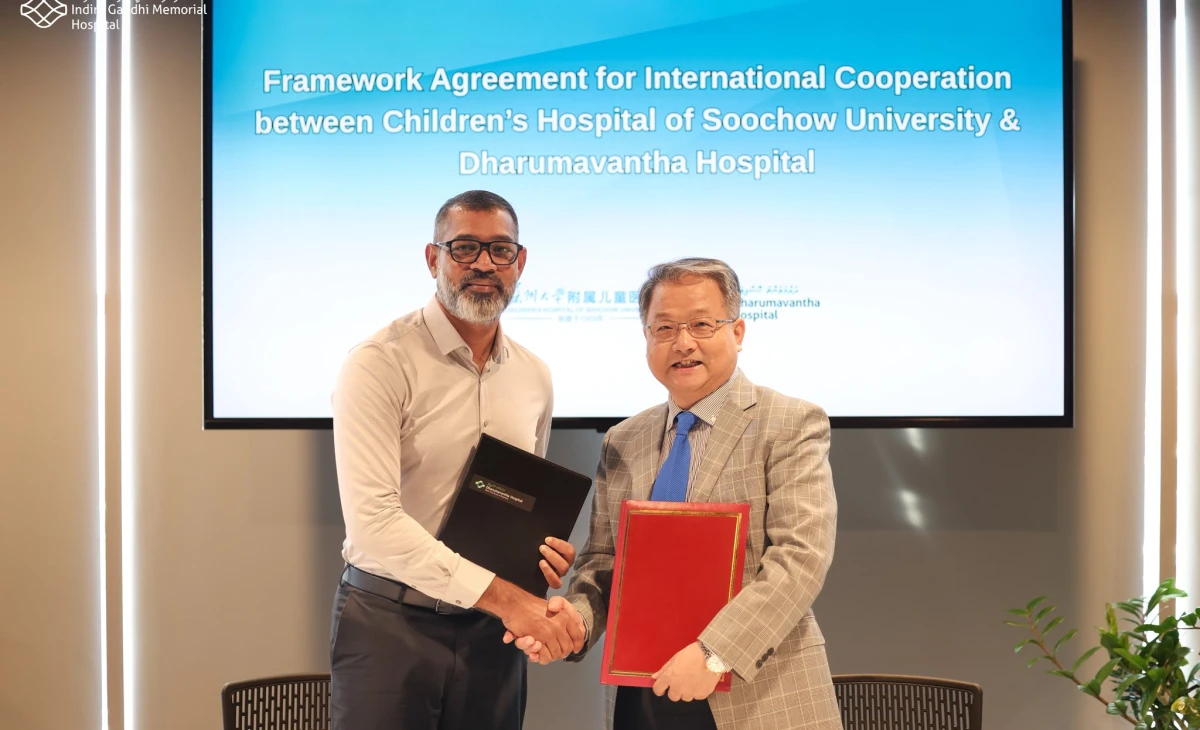
Dharumavantha Hospital has entered into a strategic partnership with China’s Children’s Hospital of Soochow University through the signing of a Memorandum of Understanding (MoU) aimed at improving paediatric surgical services in the Maldives.
The agreement, announced by Indhira Gandhi Memorial Hospital (IGMH) via social media, is designed to strengthen collaboration in clinical expertise, professional training, and the exchange of medical knowledge. IGMH, the main state hospital overseeing Dharumavantha Hospital, hailed the partnership as a significant step toward advancing the quality of healthcare available to Maldivian children.
The signing ceremony was welcomed by Chinese Ambassador to the Maldives, Kong Xianhua, who described the agreement as a “meaningful step” in supporting child health and wellbeing.
“Children are our future, and health is the greatest gift,” Ambassador Kong wrote in a post on X (formerly Twitter), noting that the collaboration brings hope, compassion, and valuable medical support to families across the Maldives.
He further praised the dedication of the medical teams involved and highlighted the broader diplomatic value of the initiative, stating that it reinforces the enduring friendship between the Maldives and China.
This MoU marks another milestone in growing bilateral cooperation in healthcare. In a separate ongoing initiative, the Maldivian government is also working closely with China to develop a new 100-bed tertiary hospital in Villimalé, aimed at expanding the nation’s advanced care capacity.
The partnership with Soochow University’s Children’s Hospital is expected to lead to joint training programmes, technical assistance, and collaborative care initiatives focused on paediatric surgery. Health officials believe the collaboration will help address specialised medical gaps and build long-term clinical expertise in the Maldives.
As the country continues its efforts to modernise and expand its healthcare infrastructure, such partnerships play a crucial role in bringing world-class treatment and knowledge closer to home—especially for the most vulnerable patients: children.