



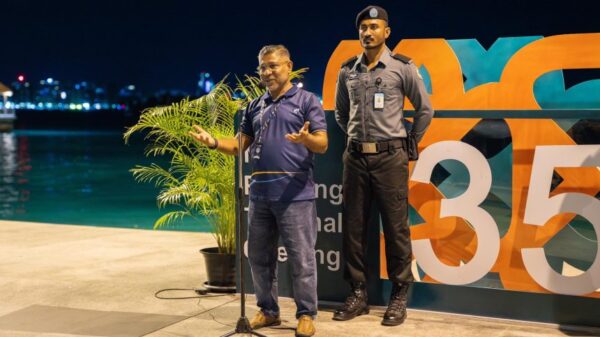











Residents of Addu City took to the polls on Saturday in a historic referendum that could redefine how the southern atoll is governed. Voting began at 8 a.m. and will continue until 4 p.m., with ballot boxes set up across Hulhudhoo, Meedhoo, and Feydhoo — as well as in the capital, Malé.
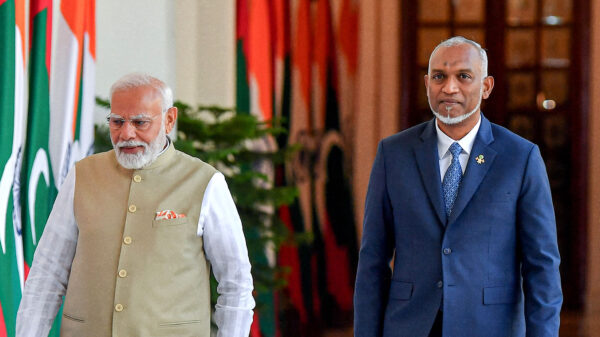
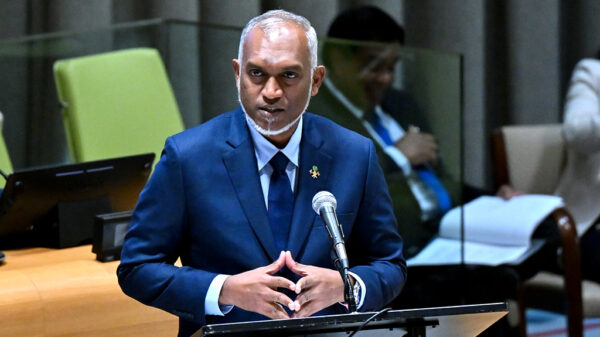
The referendum, held under a presidential decree issued by President Dr Mohamed Muizzu, seeks public opinion on whether the three islands should remain under the collective administration of the Addu City Council or form separate, self-governing island councils.

Each island has been presented with a distinct question: residents of Hulhudhoo are asked if they support the creation of a standalone island council, while those in Meedhoo and Feydhoo are voting on whether they wish to withdraw from Addu City Council and establish independent administrations.
According to the Elections Commission of Maldives (ECM), 18 ballot boxes have been deployed for the poll — seven in Malé at Kalaafaanu School, five in Feydhoo, three in Meedhoo, and another three in Hulhudhoo.
To uphold transparency and credibility, 78 political parties and organizations have registered monitors, while 57 parties are participating as observers. Ballot counting will commence 30 minutes after the close of polls, with provisional results to be announced at the polling stations. The ECM is expected to release official results on Sunday.
A total of 9,576 people are eligible to vote in the referendum, including 225 voters who re-registered to cast their ballots outside their home islands. The ECM provided the following breakdown of voter distribution:
-
Hulhudhoo: 1,242 eligible voters (3 boxes)
-
Meedhoo: 1,618 eligible voters (3 boxes)
-
Feydhoo: 2,835 eligible voters (5 boxes)
-
Malé (Kalaafaanu School): 3,881 eligible voters (7 boxes)
The outcome of the referendum will determine whether Hulhudhoo, Meedhoo, and Feydhoo continue under the unified Addu City Council or move toward establishing independent councils — a decision that could mark a significant shift in Addu City’s political and administrative landscape.