


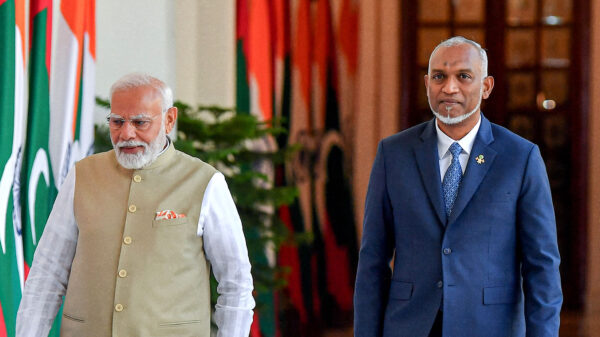
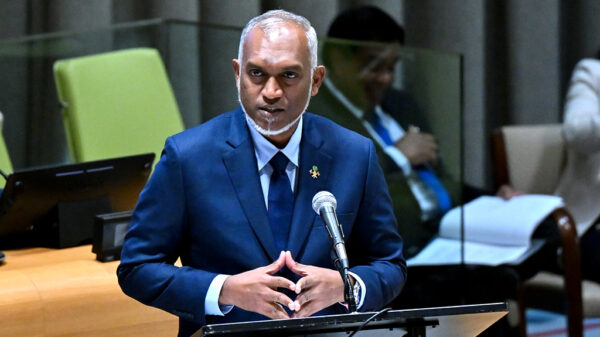







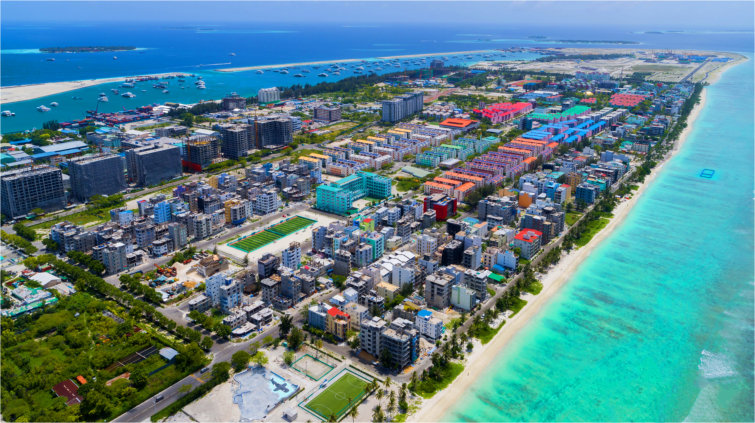
President Dr Mohamed Muizzu has confirmed that land recipients in both phases of Hulhumalé will be permitted to construct buildings of up to ten storeys, reaffirming a key pledge made by his administration.
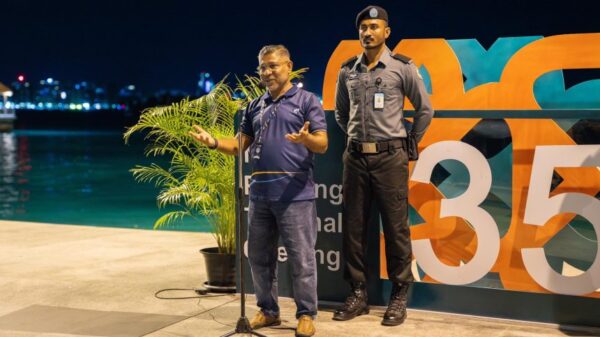
The announcement was made during a community meeting with residents of Hulhumalé Phase II, where the President outlined the government’s updated land-use guidelines and addressed concerns related to housing, urban planning and infrastructure.

President Muizzu explained that the maximum building height for Phase II mirrors that of Phase I, noting that construction limits are determined by officially approved land-use plans. As population density increases, he said, adjustments to planning policies and infrastructure requirements become necessary to ensure sustainable development.
He stressed that ten-storey buildings will be allowed across all applicable land plots in both phases, consistent with the administration’s commitments.
Parking, zoning and development requirements
Addressing longstanding concerns about congestion, the President announced that all ten-storey buildings must allocate the entire ground floor for parking. In addition, developers will be required to designate at least one upper floor for non-residential or income-generating purposes, ensuring a mixed-use environment that supports community services and commercial activity.
Land conversion and financial relief
President Muizzu also highlighted changes to policies governing land ownership in Hulhumalé. While state-issued land can already be converted into private land through payment of the full land price, he noted that previous governments had not extended any financial concessions to recipients.
In contrast, he announced that the current administration will introduce a 10 percent discount on the land price, which will be deducted from the remaining amount owed by beneficiaries.
The policy updates form part of the government’s broader housing and urban development agenda, which aims to ease overcrowding in the Greater Malé Region while promoting more efficient and resident-friendly planning practices.