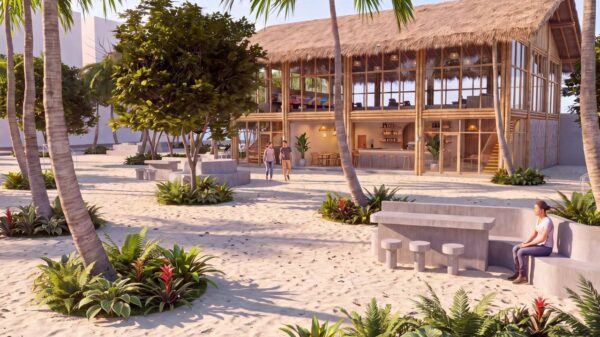











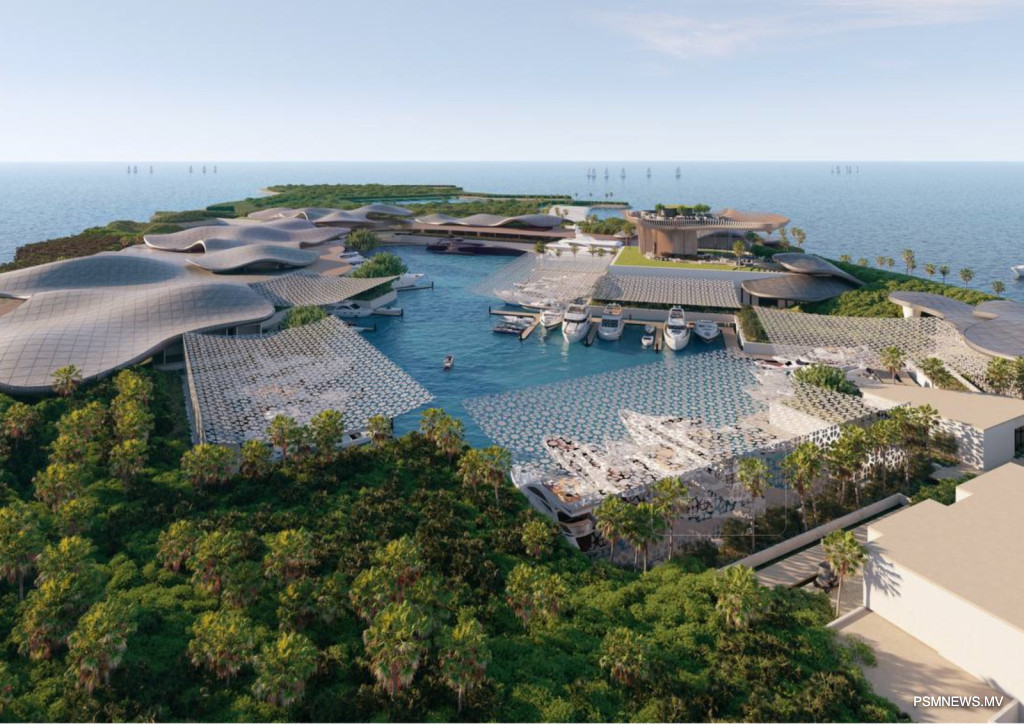
A major USD 750 million integrated tourism and lifestyle development, known as Project Ayla, is taking shape in Noonu Atoll, with the government positioning it as a flagship investment aimed at redefining sustainable luxury and long-term economic resilience in the Maldives.
The project, which has already completed its dredging phase, is expected to be fully developed by 2028. Officials say Project Ayla represents the first Special Economic Zone (SEZ) in the country, combining high-end tourism with environmental sustainability, social infrastructure, and economic diversification.

Unlike traditional resort developments, Project Ayla is designed to integrate multiple sectors within a single development. While luxury villas, marinas, and hospitality facilities form a core component, the project also includes plans for an international healthcare centre, hospitality and skills training facilities, and modern agricultural cooperatives aimed at strengthening local food production and reducing dependence on imports.
Sustainability has been identified as a central pillar of the development. According to project details, at least 60 percent of the zone’s energy demand will be met through renewable sources, with additional systems planned to ensure self-sufficiency in waste management and food supply. Authorities say the project draws on the Maldives’ established “one island, one resort” model, while expanding it into a more comprehensive and environmentally responsible development framework.
Government officials have described Project Ayla as a landmark foreign investment, expected to generate thousands of jobs across construction, tourism, healthcare, agriculture, and education. The development is also expected to provide comprehensive services for residents and workers living within the zone, creating a self-contained community rather than a standalone resort enclave.
The project is being promoted as part of the Maldives’ broader push toward people-centred, resilient growth, with an emphasis on sustainable infrastructure, skills development, and long-term economic stability. Officials say Project Ayla signals a shift toward more diversified and future-ready investments as the country navigates the challenges of climate change and global economic uncertainty.