


















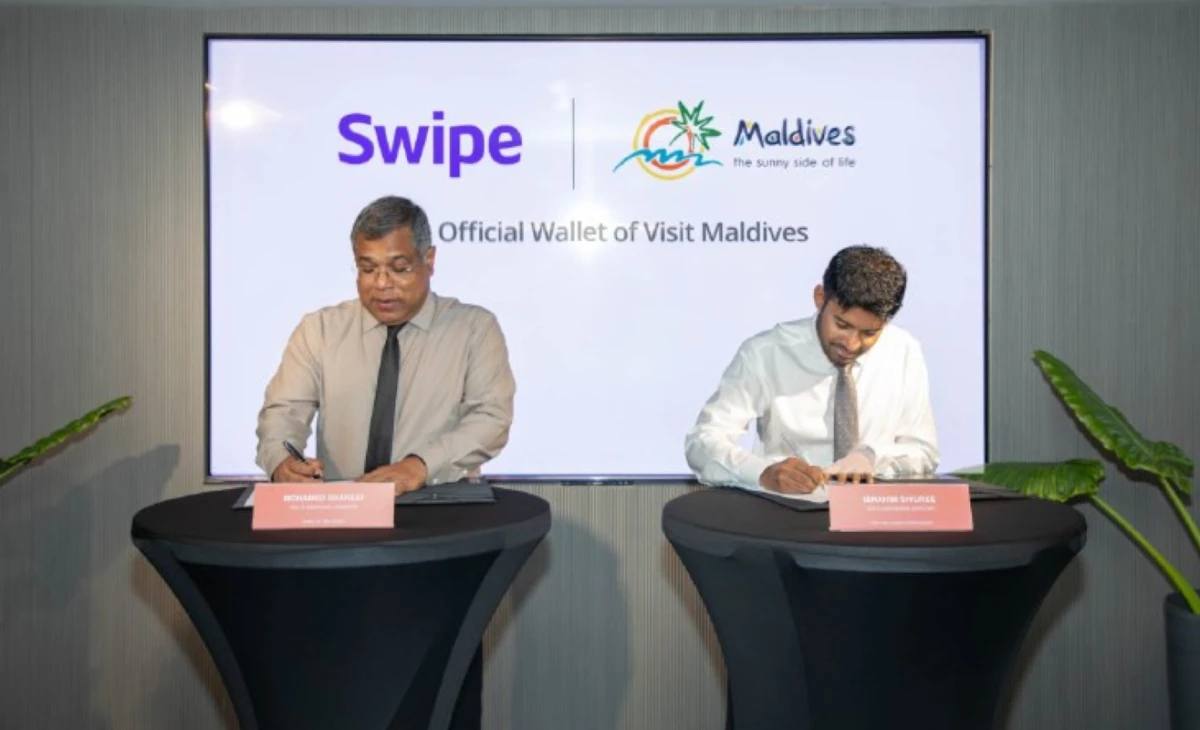
The Bank of Maldives has unveiled a new milestone for its homegrown digital wallet, Swipe, announcing that the platform will serve as the official wallet of Visit Maldives.
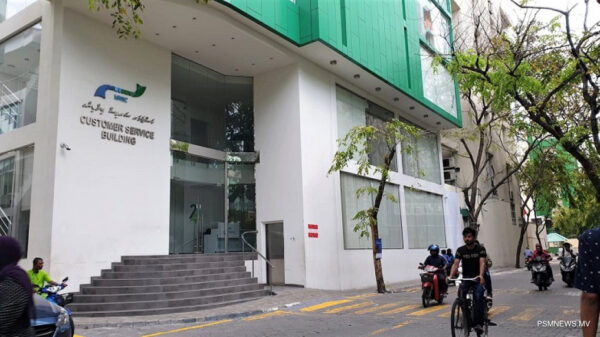
The partnership was formalised during a signing ceremony held at BML’s headquarters in Malé, where Mohamed Shareef, CEO and Managing Director of BML, and Ibrahim Shiuree, CEO and Managing Director of Visit Maldives, inked the agreement.

Under the arrangement, Swipe will be positioned as a primary payment solution for travellers visiting the Maldives. Officials say the initiative is designed to offer tourists a seamless and secure digital payment experience that aligns with the country’s reputation for premium hospitality and forward-looking innovation.
The collaboration reflects a broader ambition to modernise financial services within the tourism ecosystem — a sector that remains the backbone of the Maldivian economy.
Developed locally, Swipe is a multi-currency digital wallet tailored to comply with domestic regulatory frameworks while meeting international payment standards. The platform enables both local and global transactions, with users able to fund their wallets through BML accounts or via credit, debit, and prepaid cards.
Since its limited rollout in January, Swipe has steadily expanded its feature set. Current capabilities include instant peer-to-peer transfers, QR-based payments, shareable payment links, spending analytics, and streamlined top-up and withdrawal options.
The announcement builds upon a wider collaboration established last year between BML and Visit Maldives, signalling a continued commitment to advancing digital transformation in the tourism industry.
Officials from both institutions highlighted that enhancing digital payment infrastructure not only improves convenience for visitors but also boosts operational efficiency for businesses and strengthens the Maldives’ competitiveness as a global travel destination.
With the official wallet designation now in place, Swipe is expected to play a growing role in shaping how tourists transact across the islands — from resort stays to local experiences — marking another step in the country’s digital evolution.