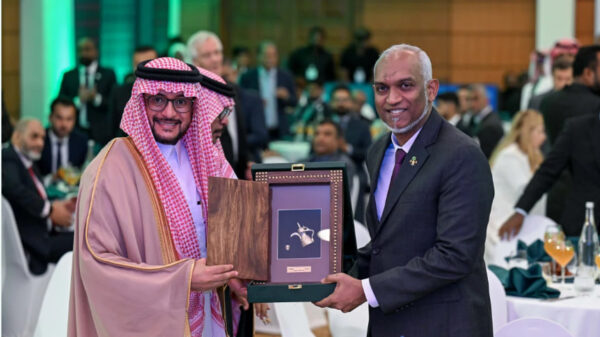














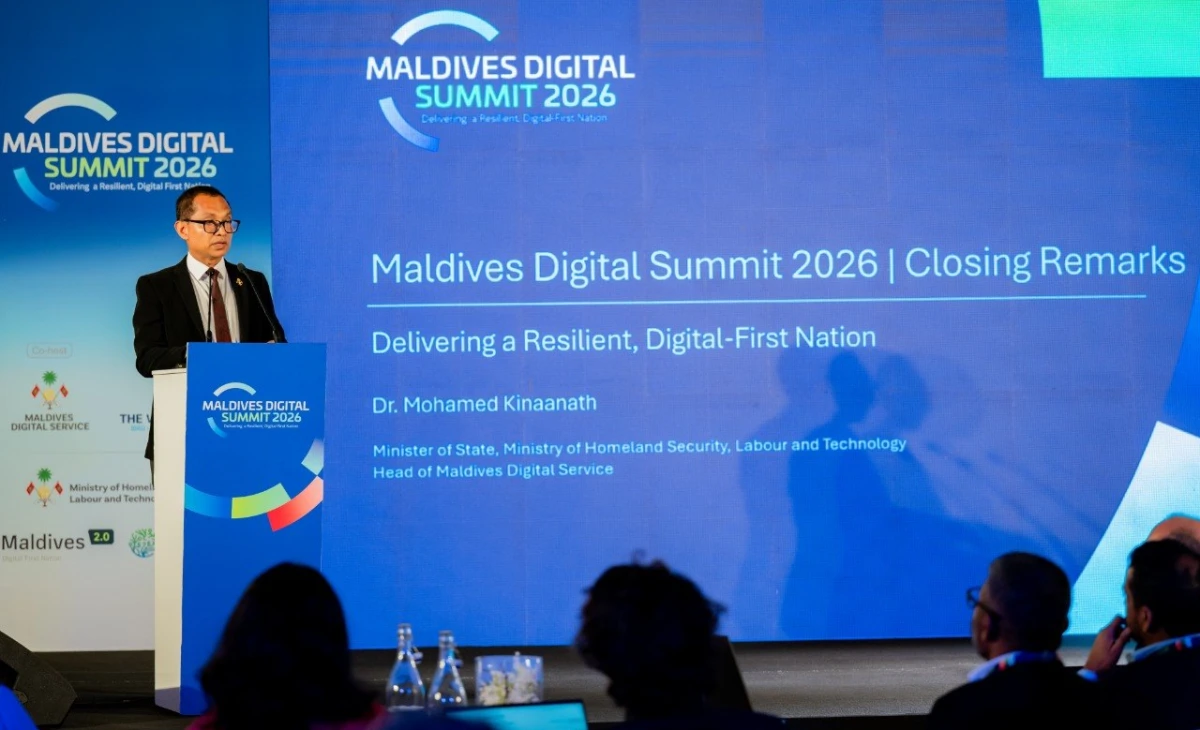
The Maldives Digital Summit has wrapped up following three days of discussions focused on accelerating the country’s shift toward a digitally driven future.
The event, held from April 27 to 29, brought together senior government officials, policymakers and international experts to support the nation’s “Digital First Nation” agenda under the broader Maldives 2.0 vision.

Organised by the Maldives Digital Service in partnership with the World Bank, the summit saw participation from the President’s Office, various ministries and key national institutions, alongside global partners.
Focus on Coordination and Digital Systems
Speaking at the closing session, State Minister Dr Mohamed Kinaanath said the summit played a key role in strengthening coordination among institutions and aligning efforts to move the country’s digital transformation forward.
He noted that the discussions helped lay the groundwork for building a system that is more data-driven and responsive to public needs, with an emphasis on improving service delivery.
Global Expertise Shared
The summit also featured contributions from international experts with experience in large-scale digital reforms. Among them were former Moldovan Deputy Prime Minister for digitalisation Iurie Turcanu, South Korea’s National Information Society Agency Vice President Yoon Seok Ko, and former UK Government Digital Service Programme Director Jessica McEvoy.
Their insights highlighted global best practices and lessons from countries that have successfully implemented digital governance systems.
Key Areas Discussed
Participants explored several critical areas needed to advance the Maldives’ digital transition, including:
- Strengthening coordination between government institutions
- Developing a secure national data exchange platform
- Expanding digital identity systems
- Promoting safe and reliable digital transactions
- Encouraging responsible use of emerging technologies such as artificial intelligence
Moving Toward a Digital State
Officials say the summit is part of a broader push to modernise public services and build a more connected, efficient state.
With the Maldives continuing to implement its Maldives 2.0 roadmap, the discussions are expected to guide future policy decisions and technological investments aimed at transforming how government services are delivered.