First Lady Sajidha Mohamed has called for a change in public attitudes towards mental health, saying that seeking psychological treatment should be recognised as an act of courage rather than something to be ashamed of.
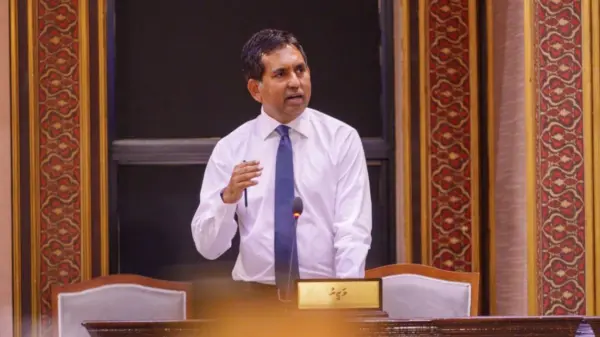
Speaking at the opening of the 16th International Conference of the SAARC Psychiatric Federation, where she attended as guest of honour, Sajidha said social stigma remains one of the greatest barriers preventing people from seeking help for mental health conditions.
She stressed that building a mentally healthy society requires more than access to medical treatment, with families, communities and institutions all having a responsibility to support those experiencing psychological difficulties.
According to the First Lady, mental wellbeing is closely connected to human dignity, relationships and people’s hopes for the future.
She said mental health conditions should not be viewed simply through medical diagnoses or statistics, as every individual experiencing psychological distress has personal circumstances that deserve understanding and compassion.
Referring to young people struggling with anxiety, parents overwhelmed by responsibilities, children unable to express emotional difficulties and families searching for support, Sajidha said these experiences reflect the human realities behind mental health challenges.
“These are not just medical cases or statistics. They are human beings. They are families. They are parts of our society,” she said.
The First Lady noted that depression, anxiety and trauma affect people across different age groups, but negative social attitudes often discourage individuals from acknowledging their difficulties or seeking professional assistance.
She urged the public to help create an environment where people feel comfortable asking for psychological support without fear of judgement.
Sajidha also expressed particular concern about the mental wellbeing of children and young people, highlighting the pressures they face in their daily lives.
Speaking from her perspective as a mother, she identified academic expectations, family difficulties, social pressures and online influences as factors that can affect children’s emotional and psychological development.
She emphasised the importance of recognising changes in children’s behaviour that may indicate emotional distress and responding with understanding, care and appropriate professional support.
The First Lady said the country’s future depends in part on ensuring that children grow up in environments that support their mental wellbeing.
She also highlighted the importance of making mental healthcare accessible throughout the Maldives, where the geographical separation of islands presents challenges in delivering specialised medical services.
Access to psychological and psychiatric care has been an important consideration in the development of the country’s healthcare system, particularly for communities outside the Greater Malé Region.
For residents of smaller islands, obtaining specialised treatment can involve travelling to regional centres or Malé, making the expansion of local mental health services an important part of improving healthcare accessibility.
Sajidha said the Maldives considers the development of mental healthcare essential to building a healthier and more resilient population.
She pointed to the inclusion of mental wellbeing in the national health agenda and highlighted ongoing work by the National Mental Health Department under the country’s Mental Health Strategic Plan, which runs through 2029.
The plan provides a framework for strengthening mental health services and improving access to care across the country.
Addressing the regional dimension of mental healthcare, Sajidha said South Asian countries face many similar challenges, including social stigma, barriers to treatment and the need for stronger mental health support systems.
She said the SAARC Psychiatric Federation provides an important platform for professionals from across the region to exchange knowledge, discuss common challenges and explore ways to improve psychiatric and psychological care.
The First Lady expressed hope that the research and discussions presented during the federation’s 16th international conference would contribute to further improvements in mental healthcare.
She also thanked mental health professionals for their work supporting patients and families, while recognising the Maldives National University’s contribution to training healthcare professionals and advancing research in the field.